1-Page Summary
Boxing is a natural metaphor for marketing—boxing and marketing are both aggressive and strategic, and both require dedication and hard work. In Jab, Jab, Jab, Right Hook, marketing expert Gary Vaynerchuk explains how to land perfect punches in the social media arena.
First, we’ll look at how the rise of social media has changed marketing. Next, we’ll look at how to create great social media content. Finally, we’ll look at individual platforms and how to take advantage of their specific features.
(Shortform note: Jab, Jab, Jab, Right Hook was published in 2013, so some of the content may be outdated.)
The Rise of Social Media
These days, almost everyone has a mobile device and many people are on social media. There are 325 million mobile subscriptions in the US and the author suspects that almost half of the time people spend on their phones is used for social media.
In spite of social media’s popularity, many marketers and businesses are reluctant to embrace new platforms. This is for a variety of reasons, including feeling they don’t have time or thinking the new platform is silly. This means that any brands that do embrace new platforms have a head start. Often, early adopters are small businesses because they don’t have the same PR and legal red tape that larger companies do.
The small business advantage disappears as new platforms become more mainstream and large companies work through their red tape. However, even if larger companies have higher budgets and more staff that can interact with the community, small businesses can still compete by increasing their effort. If you work hard to create great content and show the community you care, you’ll do well even if other companies have more resources. Being cared for by a business is so rare that it surprises people and leaves an impression.
What’s Changed in the Era of Social Media
The rise of social media has ushered in many changes in marketing:
- Shorter campaign length. Today, every day requires new content.
- Increased customer interaction. Customers can now engage with brands rather than passively consuming their ads. They can like posts, ask questions, and demand attention before agreeing to buy something.
- Increased affordability of advertising. It’s free to set up a presence on social media and some platforms offer affordable advertising.
- Decreased reliance on traditional media companies. Now, customers can directly access their customers on their own, without the help of a TV or radio ad. Any brand can become its own media company.
What Hasn’t Changed in the Era of Social Media
Social media has changed a lot of things for marketers, but there are some constants:
- Good timing is critical. You still need to connect with customers at the time and place when they’re most likely to purchase.
- Storytelling is key. No matter where you’re telling your story, you need to write it in a way that creates enough emotion to make customers want to answer your calls to action. (For more information on storytelling, read our summary of Donald Miller’s Building a Storybrand.)
- Long-form content continues to be relevant. Social media content is becoming shorter and shorter, but long-form content still has its place. Books, movies, and YouTube videos probably won’t disappear.
- Marketing requires lifelong learning. New platforms and technologies are coming into being every day. You’ll need to learn new skills on an ongoing basis.
- You need heart, sincerity, engagement, commitment, and hustle. Marketing is hard and it takes work.
- There are two types of content, “jabs” and “hooks.” We’ll cover these in more detail in the next section.
Jabs and Right Hooks
In marketing, a metaphorical jab is content that builds the relationship between you and your customer. Jabs should be intriguing, engaging, and/or create some sort of emotional response, such as making people laugh. Here’s an example of a jab:

Oreo tweeted this when the power went out during the 2013 Super Bowl. Oreo wasn’t trying to sell anything with this tweet; they were just trying to entertain people and show the brand’s humanity.
A metaphorical right hook is marketing content that includes a call to action and aims to convert a sale. Right hooks need to be easily comprehensible, work on all digital devices, including mobile, and meet the conventions of the platforms they appear on. Here’s an example of a right hook:

Amazon posted this image and text on Tumblr. Notice the price in the copy.
While the right hook is the content that creates a sale, jabs are just as important. If you were in a boxing ring with an opponent, you couldn’t just throw a right hook out of nowhere; your opponent would slip out of the way. You need to set up an opportunity to throw the hook by throwing jabs first. It’s the same in marketing—before you ask a customer for a sale, you need to build a relationship with them. There’s no universal combination of jabs and hooks that result in a sale every time—you’ll have to experiment.
Eight Tips for Creating Great Content
Now that you better understand the social media arena, it’s time to learn about how to create great jabs and hooks. These eight tips apply to any platform:
1. Use native content including high-quality images. Native content is content that mirrors the form and content of the platform it appears on. People like native content because it provides the same value as user-generated content. All platforms use high-quality photographs.
- For example, people go on Pinterest to look at aspirational images. If your brand shares aspirational images, people on Pinterest will be interested in your posts.
2. Tailor your jabs to the customer’s desires. On social media, people want utility, an escape, and a connection with others. Invite people to engage by sparking conversations or using games or contests, and showcase your fans’ responses. Make your content interesting and intriguing.
- For example, if you’re a cosmetics company, you might create an Instagram contest that encourages people to share photos of themselves wearing your products.
3. Make sure your hooks include a price and link to the right place. People don’t want to be linked to the home page of a website when they’re trying to access the product page of whatever’s featured in the post.
- For example, on Tumblr, Target posted about a dress and included links that took customers directly to the dress product page.
4. Take advantage of pop culture. If you show your followers that you’re in their loop and share their interests, whether that’s by talking about a popular song or sharing celebrity gossip, your brand will come across as human.
- For example, on Tumblr, comedian Paul Scheer posted about Breaking Bad to insert himself into a topic that people were already discussing.
5. Make your content micro. Microcontent is short content that responds to current events and culture. Your text should always be short and simple.
- For example, on National Sibling Day, Netflix tweeted the line “Hey brother” from Arrested Development, which Netflix had just recently aired. The only other text was a hashtag and link.
6. Maintain your identity. Know who your brand is and know its message, and always keep both of these things in mind while creating your content. It’s fine to share different stories and use different tones on different platforms, but your content should always be in line with your brand’s identity.
- For example, include your logo or slogan on the images you post on Facebook.
7. Cross-pollinate. If you have a good following on one platform, use it to advertise your presence on a platform where your following is smaller.
- For example, Surf Taco has a Twitter following that’s almost 13 times larger than its Instagram following, and on Twitter, they linked to an Instagram photo.
8. Don’t interrupt. Don’t use banner ads or pop-ups, which are highly interruptive. When you interrupt someone from their media with an ad, at best they’re annoyed, at worst, they now hate your brand.
Specific Platforms
While there are some techniques that apply to any social media platform, each platform has its own features, and native content looks different on all of them. Jab, Jab, Jab, Right Hook covers how to create platform-specific content for five major social media platforms:
Facebook is a social media site that allows users to share text, photos, and videos with their network. As of December 2012, there were over a billion monthly active Facebook users. People use Facebook to find out what people they know are doing and socialize.
Notable Features
- Advanced analytics. Studying Facebook’s analytics can tell you a lot about the human psyche, and you can use this data to make your content more effective.
- Huge amount of content. Part of the reason Facebook is such a good marketing tool is that there are so many people on it, but all of these people create content yours has to compete with.
- Free targeting functionality. Facebook offers settings that allow you to make certain posts visible to only a certain demographic, which is ideal for right hook posts.
- Use of curating algorithms. Facebook doesn’t want users to see posts they’re not interested in (because if they get bored they’ll leave the site), so Facebook uses algorithms to curate people’s News Feeds. Only 3-5% of your content shows up on your fans’ News Feeds organically (“organically” means if no one shares the story or you don’t pay to make it more visible.)
- Paid advertising. Facebook has two types of ads, and the most effective is sponsored stories. A sponsored story is a post that will be visible to non-followers and more than 3-5% of your fans’ News Feeds.
Three Tips for Great Facebook Content
- Choose the correct format. On Facebook, you can create a link-based post, which shows a small photo beside the link, or a photo-based post, which prioritizes the photo. If you have a nice photo, choose the photo-based post.
- Optimize for mobile. More people than ever are accessing Facebook sites on mobile devices, so make sure text on your images is legible at small sizes and not cut off if cropped by the smaller mobile screen.
- Regulate the comments section. Many people try to piggyback on popular fan pages to sell their own products or business, which is content that people aren’t interested in, so you need to remove it. You also need to respond to people’s comments and questions.
Twitter is a microblogging platform and posts are called “tweets.” As of December 2012, there were 500 million Twitter users worldwide, and most users were young and urban. People mainly use Twitter to share information and news.
Notable Features
- Mobile-friendly. Twitter is one of the most mobile-friendly platforms.
- Very public. Most tweets are public to the entire internet, even to people who don’t have accounts.
- Huge potential for community engagement. Unlike other platforms where you can only talk to people who are already following you, on Twitter, you can initiate conversations with potential new customers.
- Retweeting features. On Twitter, you can retweet (reshare) other people’s tweets. This allows you to rework other people’s content instead of having to come up with your own.
- The importance of context over content. Like Facebook, there’s an overwhelming amount of content on Twitter and if you’re only tweeting about your products, you’re not going to stand out. You can stand out by putting your own spin on the news and augmenting the existing content with commentary, humor, or voice.
- Trend-tracking features. Trends are words, topics, and hashtags that are popular at any given moment. You can use settings to track trends (at levels ranging from regional to worldwide) and then use that knowledge to post timely content with appropriate context.
- Paid advertising. On Twitter, you can advertise via a promoted tweet. Promoted tweets are clearly labeled “Promoted” and are given more visibility than other tweets.
Four Tips for Great Twitter Content
- Use memorable and idiosyncratic hashtags. Hashtags should match the voice of your brand. Additionally, they should be native to Twitter (they should be employed the same way users employ them).
- Pay attention to voice. Your voice should sound like your brand and be appropriate to the Twitter audience (which tends to enjoy irony).
- Break the news first. If you can release news people are interested in before anyone else does, it’ll be your tweet that’s reshared as the news goes around.
- Trendjack. Trendjack refers to using hashtags that are trending to boost the visibility of your tweet. Twitter users regularly look through the list of posts that use the trending hashtags, and if you use a trend, your tweets are more likely to be seen by people outside your existing network.
Pinterest is a social bookmarking site that allows people to save posts they like (“pins”) into collections (“boards”). At the author’s time of writing, Pinterest had 48.7 million users, many of whom were women and mothers. People use Pinterest because it’s aspirational—people pin images of what they’d like their lives to look like, not actually what they are.
Notable Features
- Purchase-friendly. A Steelhouse study found that users are almost 80% more likely to buy something they see on Pinterest than on Facebook. Twitter produces only a quarter of the revenue-per-click of Pinterest.
- Distinction between boards and brand pages. People can follow your collections separately from your brand, so you have more freedom to explore your brand’s identity.
- Caption features. You can accompany all your images with custom captions or descriptions.
- Repinning features. Like Twitter, you can reuse and upcycle other people’s content. This might not help you make sales, but it’s good for building relationships and establishing trust.
- Rabbitholing opportunities. Most people on Pinterest don’t go directly to a brand’s page; they arrive there by clicking on images they’re interested in that eventually lead to the page. People have the potential to end up on your brand page no matter what board they initially started at.
Three Tips for Great Pinterest Content
- Post aspirational images. People go on Pinterest to imagine what their lives could be like, so post images of luxury, beauty, and fun. Ask yourself if the image in the pin is high-quality enough to be printed in a magazine. If it isn’t, don’t post it.
- Give your boards and photos good titles and descriptions and categorize images so people don’t have to debate where to repin. A good filing system will help people find and interact with your pins.
- Use infographics. Infographics are popular and create engagement.
Instagram is a photo and video-sharing social media platform that’s owned by Facebook. Instagram is used by younger demographics and as of December 2012, there were 130 million monthly active users. People like Instagram because they like interacting with others visually.
Notable Features
- No reposting. You can only post your own content, not reshare other people’s. However, you can get around this by using outside apps, or by screenshotting a post and then posting the screenshot.
- No linking. Posts can’t be linked to outside sites. However, you can get around this by putting a URL into the photo’s description.
- Integration with other social media platforms. Users can connect their Instagram accounts to Twitter and Facebook.
- “Baked-in utility.” Baked-in utility means a platform is good at what it’s designed to do. Instagram is designed to help users take good smartphone photos.
- Explore. Explore is an Instagram page that features the best content on the site. If you can get your content featured on Explore, its visibility increases exponentially—everyone, not just your followers, will see it.
Four Tips for Great Instagram Content
- Use hashtags freely. On Twitter, hashtags are used sparingly for humor and irony, but on Instagram, use as many as you want because they’re how people find your posts (clicking on a hashtag brings users to a page of all the images that use that hashtag).
- Cater to the younger generations. Many people on Instagram are young.
- Create holiday-themed content. Holiday-themed photos tend to create engagement because they evoke excitement and nostalgia.
- Pay attention to placement. For instance, if your image has a heart in it, crop the image so that the heart of the “like” button lines up with it.
Tumblr
Tumblr was originally a blogging platform, but in January 2012 it redesigned its dashboard to become more social. Tumblr is mainly used by 18-to-34-year-olds and had 132 million monthly users as of June 2013. Tumblr is more of a publishing platform than a consuming one, but people do consume media on it, and quickly.
Notable Features
- Customizable homepage. Unlike Twitter or Facebook, you can choose your art, logo placement, color, format, and font, which allows you to better express your brand’s identity.
- Interest-based connections. Connections are made based on interest, not who you already know. If you post content people are interested in and tag it appropriately, they’ll find it, whether or not they follow you.
- GIF support. GIFs are soundless videos that play on a loop without having to be clicked. They’re both animated and live-action and often captioned. (Shortform note: In 2013, when Jab, Jab, Jab, Right Hook was published, Tumblr was the only platform that supported GIFs. Today, most of the platforms listed in this summary support them too.)
- Relatively new. Fewer businesses are on Tumblr than other platforms, so you have a chance to corner the market before your competitors arrive.
Four Tips for Great Tumblr Content
- Customize your homepage to showcase your brand identity. You can use the same fonts and colors as your logo.
- Use GIFs. GIFs are engaging and can be used to make people laugh.
- Be cool. Tumblr’s audience is young, cool, and interested in exclusive content. Consider black and white images and pop culture references.
- Use appropriate tags. Tags help people find your posts, so choose specific ones.
Chapter 1: The Social Media Arena
Boxing is a natural metaphor for marketing—boxing and marketing are both aggressive and strategic, and both require dedication and hard work. In Jab, Jab, Jab, Right Hook, marketing expert Gary Vaynerchuk explains how to land perfect punches in the social media arena.
First, we’ll look at how the rise of social media has changed marketing. Next, we’ll look at how to create great social media content. Finally, we’ll look at individual platforms and how to take advantage of their specific features.
(Shortform note: Jab, Jab, Jab, Right Hook was published in 2013, so some of the content may be outdated.)
The Rise of Social Media
These days, almost everyone has a mobile device and most people are on social media. There are 325 million mobile subscriptions in the US and the author suspects that almost half of the time people spend on their phones is used for social media.
While it’s normal for new platforms to replace old ones, social media is taking over quickly. To get an audience of 50 million, it took radio (which replaced print) eight years. It took TV (which replaced radio) 13 years. It took Instagram (which replaces everything that’s come before it) 18 months.
People are so addicted to social media that they expect all media, marketing, and technology to have a social element. Digital media that doesn’t have a social element, such as banner ads and emails, isn’t as effective anymore. For example, in 2002, the email open rate was 37.3%. By 2011, it was only 17%. Social media is even taking people away from real life—people are on their phones in grocery stores and ignore displays and marketing in their physical surroundings.
Because social media is so widespread, quick-growing, and popular, businesses and marketers need to create a strong presence on all of the major platforms. Ideally, businesses will also be early adopters of new platforms.
Skepticism and the Early Adoption Advantage
In spite of the fact that social media is where the population’s attention is focused, most businesses and marketers don’t take advantage of it, especially new platforms. There are several reasons for this:
- They think social media doesn’t matter.
- They don’t understand it.
- They think it’s a fad that will soon die out.
- They don’t think it works. (It can take a while for the analytics to show results.)
- They’re scared of making a mistake or starting a lawsuit.
- For example, Pinterest encourages users to share images they don’t own.
- They don’t have time.
Even once marketers create a presence on one platform (often Facebook because it has such a large audience), they don’t necessarily respect other platforms. Most marketers respond to a new platform like this: Once they hear about it, they spend only a few minutes exploring. The moment they find something low-brow that makes them think the platform’s a waste of time—for example, a nonsensical post about how someone likes ketchup—they abandon it.
Because of this reluctance to embrace social media, you and your brand don’t face a lot of competition on new platforms. No one knows which platform will take off, but once one seems to be doing well, invest in it. Explore the platform and if you find silly posts, instead of writing off the platform as silly, consider how you could make better content than what’s currently posted.
Then, spend a year learning the platform more deeply than the average user. This forward-thinking will not only earn you a strong presence on that platform, but it will also earn you media attention (because you’re doing something trailblazing) and make your company attractive to new talent (because you’re progressive).
- For example, in 2006, YouTube was still maturing. There were lots of silly videos of people mixing Mentos and Coke. The author saw that YouTube had potential though, so he invested in learning how to use it by watching videos and creating his own. He ended up creating successful wine review videos that promoted his wine company.
Small vs. Large Businesses: A Matter of Effort
Embracing a new platform is usually easier for small companies than large ones. This is because smaller companies are more nimble and don’t necessarily have legal or PR departments that stifle their creativity or bind them in red tape.
However, as platforms become more mainstream and larger companies begin to invest in them, the small business advantage disappears. Larger companies have higher budgets and more staff that can interact with the community. For example, a company with ten people answering customer questions on Twitter has an advantage over companies with just one person.
However, a higher budget and large staff aren’t necessarily synonymous with effort. If you’re a smaller company and you work hard to create great content and interact with the community, it doesn’t matter if other companies have more staff. Effort is how small companies successfully compete with big ones in the social media arena.
How to Interact With Effort
The most important kind of interaction is making customers believe that you care about them. People like to be informed and entertained, but being cared for is so rare that it surprises people and leaves an impression. Make the effort to reply to your customers’ social media queries and concerns.
- For example, if you were unclear about the timing of a sale in the initial post, go back and clarify, which will strengthen your right hook and your customer relationships.
When you’re engaging with someone, always tag them. This both ensures that they see your reply and forces them to return to your brand page to continue the conversation.
- (Shortform example: If someone comments with a question on your Facebook post, when you respond, don’t only respond to their question; include the @ symbol and her name so that the response is linked to her and she’s notified.)
What’s Changed in the Era of Social Media
The rise of social media has ushered in four changes to how marketing works:
Change #1: Shorter campaign length. Before social media, big businesses would create 6-month-long campaigns using the same images for outdoor signage, print, and TV. Regardless of whether the campaign was effective, the old one ended and the new one began. Today, every day is a new campaign and requires new content tailored to specific platforms.
Change #2: Increased customer interaction. Before social media, traditional marketing was a one-sided conversation. Businesses put ads in the media and customers viewed the ads. Today, however, customers have the opportunity to interact with businesses on social media. They can like posts, ask questions, and demand attention before agreeing to buy something.
Change #3: Increased affordability of advertising. Before social media, marketers relied on traditional media such as television ads to distribute their advertising. Today, it’s free to set up a presence on social media and some platforms offer affordable advertising.
- For example, if you wanted to test out two ads aimed at different demographics on TV, you’d have to spend weeks creating two different ads, and then show them on different channels at different times, depending on when you think the target demographics are watching. You’d have to run them for two weeks so that your demographic would have seen them three times, and this would cost you between $7,000-$13,000. You’d have no way of knowing if people actually saw the ads. In contrast, if you wanted to test out two different ads on Facebook, all you’d have to do is create two targeted posts aimed at different demographics. Targeted posts are free and quick to set up, and you can watch people interact with your posts in real-time as they like or comment.
Change #4: Decreased reliance on traditional media companies. Before social media, companies rented their time with customers from traditional media companies. With the advance of social media, however, companies can access their customers on their own, and often for free—real people on social media will distribute your content for you if it’s good enough. Any brand can become its own media company, though it needs to be clear that its media arms aren’t objective—customers won’t put up with a lack of transparency, especially younger ones who have well-honed BS detectors.
- For example, a sports equipment brand such as Nike could create its own sports programming and no longer rely on ESPN.
What Hasn’t Changed in the Era of Social Media
Social media has changed a lot of things for marketers, but there are six constants:
Constant #1: Good timing is critical. A goal of marketing has always been, and always will be, to connect with customers at the moment and place when they’re most likely to purchase. Today that place is social media, but no matter where it ends up being in the future, that’s where you need to be.
Constant #2: Storytelling is key. No matter where you’re telling your story, you need to write it in a way that creates enough emotion to make customers want to answer your calls to action. You can change your story often, but it should always include some of the following:
- Your company’s history
- Your competitor’s history
- What your customers are interested in (Shortform example: One day your story might be “Our bathroom cleaner will halve the time you spend doing chores” to appeal to the customers who want more free time. Another day it might be, “Our cleaner is made of biodegradable materials” to appeal to the customers who are concerned about the environment.)
- What’s going on in the world and how you could relate that to your brand
Constant #3: Long-form content continues to be relevant. Social media content is becoming shorter and shorter, but long-form content still has its place. Books, movies, and YouTube videos probably won’t disappear.
Constant #4: Marketing requires lifelong learning. No matter what platforms and technologies come into being in the future—or how their algorithms and features evolve—where, when, how you tell the story, and who does the telling will be continually changing. You’ll need to learn new skills on an ongoing basis.
- For example, just before the author submitted this book to his editor, Instagram put out a 15-second video product and everyone scrambled to figure out how to best use it.
Constant #5: You need heart, sincerity, engagement, commitment, and hustle. Marketing is hard and it takes work.
Constant #6: There are two types of content, “jabs” and “right hooks.” We’ll look at both in more detail in the next section.
Jabs and Right Hooks
In marketing, a metaphorical jab is content that builds the relationship between you and your customer. Jabs should be intriguing, engaging, entertaining, and/or create some sort of emotional response, such as making people laugh. People might not be ready to buy from you when they first encounter your content, but if you can give them value and make them think you understand them, they’ll be more likely to choose you over a competitor in the future.
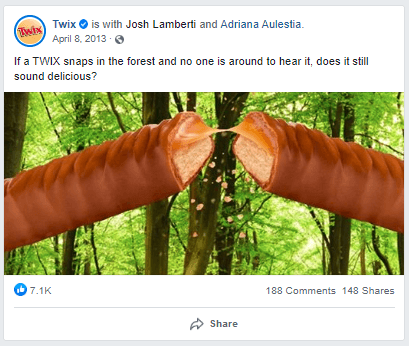
For example, on Facebook, Twix posted a photo of snapping a Twix bar in a forest to play off the old question about if a tree falls in the forest and no one hears, does it still make a sound? There was no call to action in the post; it was just meant to make people laugh and remind them of the saying.
A metaphorical right hook is marketing content that includes a call to action and aims to convert a sale. There are three characteristics of a good right hook:
- The call to action is easily comprehensible.
- For example, on Tumblr, Target posted about a dress and included links that took customers directly to the dress product page.
- The post works on all digital devices, including mobile.
- The dress post looked good on both the desktop and mobile versions of Tumblr.
- The post meets the conventions of the platform.
- The post included a GIF (a short, looping series of images) that showed a dress from several angles. GIFs are a standard on Tumblr.
This Tumblr post from Amazon is an example of a right hook. Notice the price in the copy:
While the right hook is the content that creates a sale, jabs are just as important. If you were in a boxing ring with an opponent, you couldn’t just throw a right hook out of nowhere; your opponent would slip out of the way. You need to set up an opportunity to throw the hook by throwing jabs first. It’s the same in marketing—before you ask a customer for a sale, you need to build a relationship with them. Jabs create reciprocity: When you’re given so much, people feel almost obligated to give back when you finally do throw your hook.
“Boxing” Combinations
There’s no universal formula for creating a perfect combination of marketing jabs and hooks, except that you’ll always have to throw more jabs than hooks. Additionally, well-established brands don’t have to jab as often as start-ups or brands that are trying to rebuild their reputations. For example, after BP’s Deepwater Horizon oil spill, the company had to jab a lot more often then it did previously.
To find the perfect combination for your brand, you have to pay attention to what’s going on on social media, look at your analytics, constantly experiment, and then analyze the results. Consider what happens when you post at different times, use different hashtags, use slang, and so on.
These kinds of analyses take time and money, but the investment is worth it because you’ll end up with a step-by-step method for telling your brand's story. However, keep in mind that your formula, once you figure it out, only applies broadly—you can’t repeat the same move too many times or it won’t be effective. Just like in boxing, one attack might work on one opponent but not another.
Study Your “Opponent”
It’s important, as a boxer or a marketer, to study your opponent’s (customers’) techniques. A boxer watches videos of her opponent to try to figure out her weaknesses and strengths to create a strategy so that when they meet in the ring, she’s prepared. Marketers need to pay attention to their audiences too—what are they interested in? It’s even easier to study your audience than it is for a boxer to study an opponent because as a marketer, you have access to data mining and real-time feedback.
(Shortform note: We've reorganized the order of some of the book’s material to add clarity. Chiefly, we’ve placed the general material that applies to all platforms in the first two chapters of the summary, and the discussion of specific platforms in the subsequent chapters.)
Chapter 2: Creating Great Content
Now that you better understand the social media arena, it’s time to learn about how to create great jabs and hooks. Social media campaigns should be simple and focus on these two elements:
- Jab constantly. Social media requires attention 24/7.
- Talk about what people are talking about. This creates engagement.
This chapter will discuss six rules and 11 tips that will help you craft great content for your campaigns.
Six Rules for Using Social Media
There are six rules to creating engaging, relevant content that people on social media will want to read or view. These six rules apply to any platform.
Rule #1: Use Native Content
Every platform has its own unique design, tone, culture, and aesthetic, and native content is content that mirrors the form and content of the platform it appears on. For example, user-generated content on Instagram is typically beautiful photos, so native content on Instagram would also be beautiful photos.
Customers go on social media because they want something of value, whether that’s a break from stress or news, or to connect with friends. If you employ native content, your content gives people the same value that they’re seeking. Your company’s posts feel like they’re coming from a real person and your customers are just as interested in reading your posts as they would be in reading their friends’.
For example, the earliest TV ads were people talking about products, which wasn’t anything like the kind of content that appeared on TV. Eventually, marketers started coming up with ads that were like TV shows—the ads became story-driven scenes with characters. The native content was far more effective and commercials became part of the TV-watching experience.
Rule #2: Don’t Interrupt
Before social media, it was fine for ads to interrupt customers from their media. Commercials interrupted TV shows, and no matter how native they were, there was still a hard break between what people were watching and the commercial.
Today, however, if you interrupt people, you’re doomed, because people’s expectations have changed. People have more control over what advertising they see now—pop-up blockers and commercial-skipping devices abound—and being forced to look at your ad at best annoys someone and at worst makes them hate your brand. In particular, don’t use mobile banner ads, which are a huge interruption because they block almost the whole mobile screen (and they’re overpriced).
To avoid interrupting people, your content needs to:
- Include more jabs than hooks.
- Be native. Ads need to be just as entertaining or informative as a regular post so that they don’t annoy people or break the spell of the social media experience.
- Offer something of value, such as a joke that brightens a user’s day.
Rule #3: Tailor Your Jabs to the Customer’s Desires
Leo Burnett, an expert advertiser, said that good content should be simple, memorable, inviting, and fun. The author adds that good content should also be aimed at meeting your audience’s goals, not yours. Right hooks are about your company, but jabs are all about the customer.
How do you find out what the customer wants? Consider what kinds of apps they use. The three most popular categories are:
- Utility (notepads, maps, and so on). The popularity of utility apps tells you that people want things that are useful.
- For example, if you’re a cosmetics company, you might appeal to people’s desire for information by posting a video tutorial about how to choose lipstick colors.
- Recreation (music and games). The popularity of entertainment apps tells you that people want escape.
- The cosmetics company might appeal to people’s desire for entertainment by posting music videos and then starting a conversation about stage makeup.
- Social (social media). The popularity of social apps tells you that people value their relationships with others.
- The cosmetics company might appeal to people’s desire for human interaction simply by chatting with potential customers about what they’re interested in, no matter how tangential it is to cosmetics.
Rule #4: Take Advantage of Pop Culture
Pop culture is a large part of what defines a generation. If you show your followers that you’re in their loop and share their interests, whether that’s by talking about a popular song or sharing celebrity gossip, your brand will come across as human.
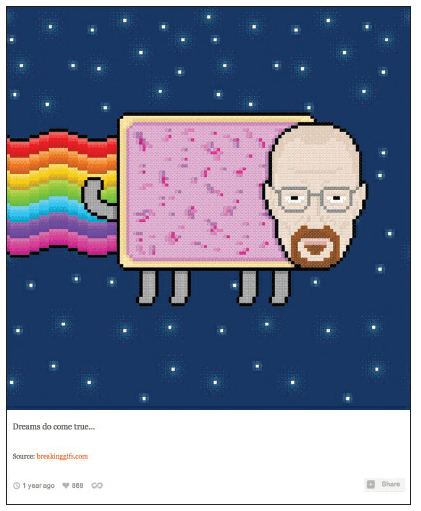
For example, on Tumblr, comedian Paul Scheer posted a GIF about Breaking Bad to insert himself into a topic that people were already discussing.
Rule #5: Keep Your Jabs Brief and Nimble
Your jabs should be what the author calls micro-content—short content that responds to current events and culture.
For example, in 2013, when the power went out during the Superdome, Oreo put out a 4-word tweet with a photo of an Oreo in the dark with overlaid text. This was the first time a brand had reacted to an event as a real person would. The tweet didn’t have any calls to action—it was just supposed to be entertaining and remind people that Oreos existed. Oreo was able to do this because they planned ahead—they put together a team that was on call to respond to whatever happened.
This is also an example of why it’s good to be the first to a platform. Oreo’s post was revolutionary because it was the first of its type; other brands who later reacted to pop culture in real time were less notable.
Rule #6: Maintain Your Identity
Know who your brand is and know its message, and always keep both of these things in mind while creating your content. Your content should always be in line with your brand’s identity.
However, it’s fine (and even encouraged) to use different platforms and jabs to share different stories. Likewise, you don’t have to always keep the same tone—for example, some of your content can be light-hearted, while some can be more “serious” and factual.
11 Tips for Creating Great Posts
Many of the qualities that make content excel or flop aren’t platform-specific. Below are 11 tips for creating great posts on any platform.
Tip #1: Keep the text short and simple. Make it as easy as possible for your followers to consume and engage with your content.
- Example of bad content on Facebook: Mercedes-Benz posted far too much text about an upcoming car. All they needed was a sentence about the car’s luxurious interior and a link to the review.

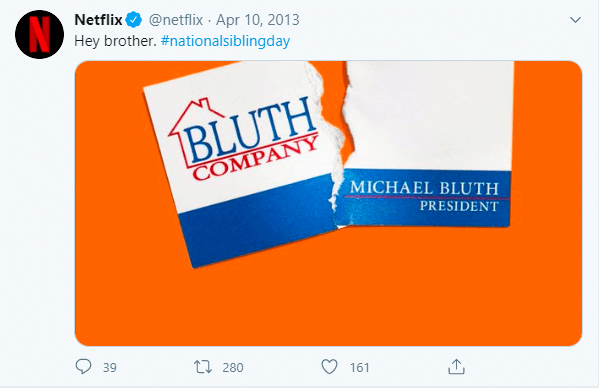
- Example of good content on Twitter: On National Sibling Day, Netflix posted a short, relevant line from Arrested Development, which they had just recently aired. The only other text was a hashtag and link.
Tip #2: Make the content interesting and intriguing. People go on social media to be entertained, so make sure your content fulfills this wish.
- Example of bad content on Facebook: Subaru posted dull, boring text—a link to a review, with no indication that the review was positive and interesting. This dull, boring text was accompanied by a dull, boring photo—half the photo is taken up by pavement and the vehicle’s too small to make out detail.

- Example of good content on Facebook: Mini Cooper posted a photo of someone driving a car through the snow in Switzerland with the top down, which made viewers curious about how that could possibly be done.

Tip #3: Make sure the call to action is appropriately placed and links to the right place. People don’t want to be linked to the home page of a website when they’re trying to access the product page of whatever’s featured in the post.
- Example of bad content on Facebook: One of Land Rover’s posts linked to another Land Rover Facebook post, not the relevant page on the Land Rover website.
- Example of good content on Pinterest: Lauren Conrad posted a photo of a woman with toned legs to advertise her workout program and the photo links to her blog, which contains the workout.

Tip #4: Include a price on your right hooks. Including a price increases the amount of engagement with your post.
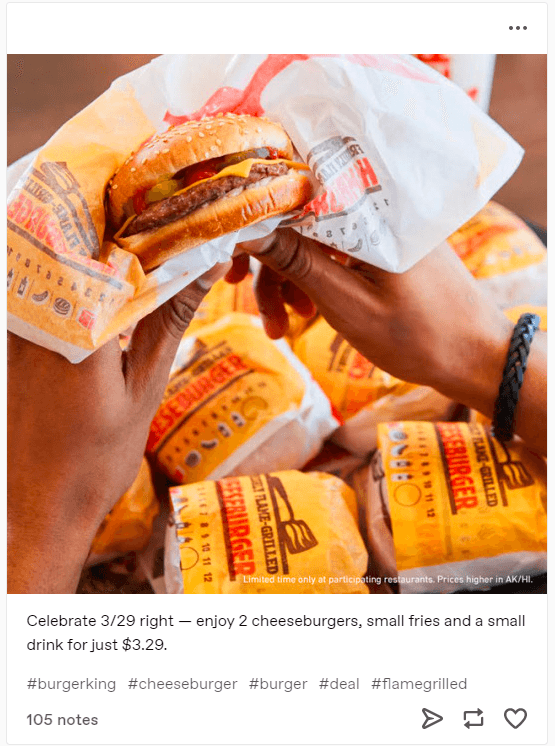
- Example of good content on Tumblr: Burger King posted an image of cheeseburgers, and gave the price of a combo in the accompanying text.
Tip #5: Use a good quality photo. It’s often appropriate to overlay your logo, slogan, or short, relevant text over the photo.
- Example of bad content on Facebook: Zeitgeist posted a photo that’s so small, dark, and blurry you can’t even tell what it is.
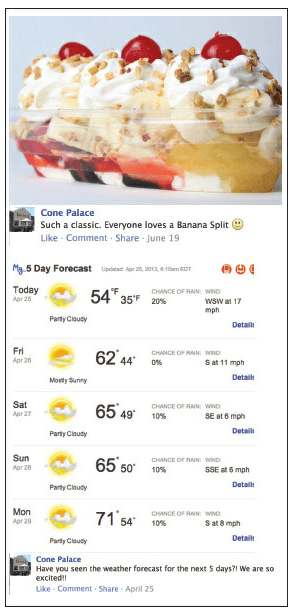
- Example of good content on Facebook: Cone Palace hires professional photographers to shoot the photos they post on Facebook.
Tip #6: Include your logo or slogan. If you don’t, people may not realize that the post is from your brand.
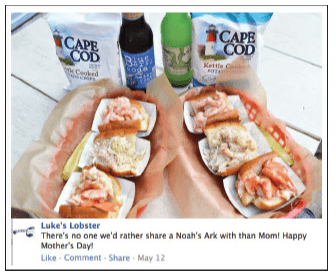
- Example of bad content on Facebook: Luke’s Lobster not only didn’t include their own logo on a photo of their food, the photo included Cape Cod chips, so anyone looking at it might think the post was authored by Cape Cod.
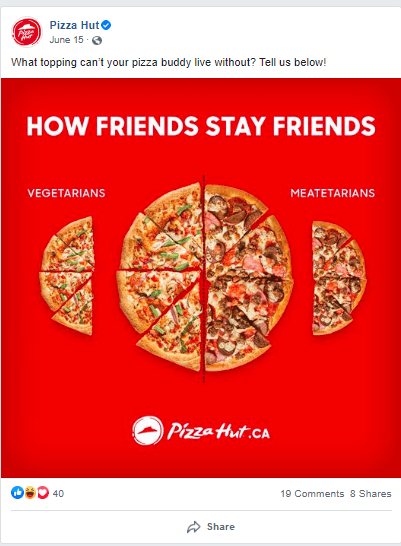
- (Shortform example of good content on Facebook: Pizza Hut put their logo and website at the bottom of this post so no one could miss it.)
Tip #7: Invite fans to engage. In your post, ask your fans questions and give them the opportunity to respond in the comments.
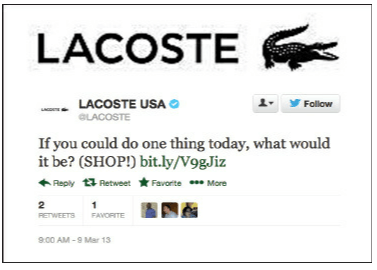
- Example of bad content on Twitter: Lacoste asked its fans what they would do today if they could only do one thing, which would have been a conversation-starter, had they not immediately answered their own question with “shop.”
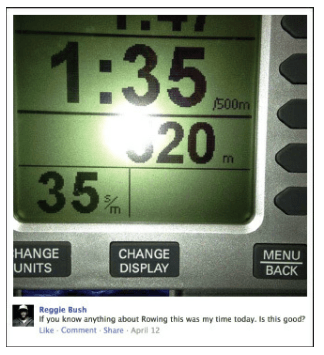
- Example of good content on Facebook: Football player Reggie Bush asked his fans for their expertise about rowing.
Tip #8: Employ gamification. Post games or contests to engage with people.
- Example of bad content on Pinterest: Lululemon posted a yes/no flowchart that people could play through in order to find their perfect yoga mat. Unfortunately, the post failed to include a link to where the customers could buy the mats, so people couldn’t actually finish or “win” the game—all they ended up with was the name of a mat, not a way to actually get the mat.
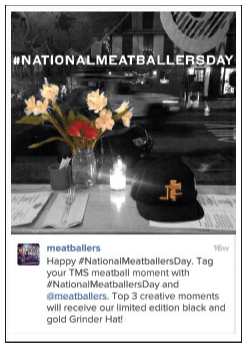
- Example of good content on Instagram: The Meatball Shop encouraged fans to tag photos of their best meatball moments with a hashtag. The best three photos would be featured on the shop’s social media and the photographers given hats. This prize encouraged people to play.
Tip #9: Showcase your fans. Share, retweet, repin, or regram in other people’s posts and images to show that you’re reading other people’s content, you share interests, and you pay attention.
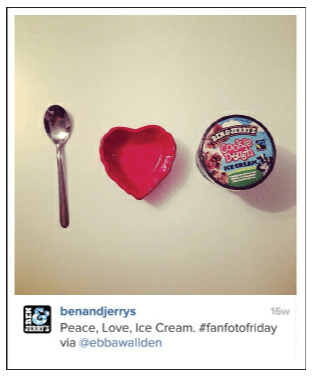
- Example of good content on Instagram: Ben & Jerry’s asked a fan if they could post a photo she took of a bowl, spoon, and ice cream. They credited her for the photo.
Tip #10: Time the post properly. If you post at an inappropriate time, people may not see your content.
- Example of bad content on Facebook: Kit Kat posted about the 2013 Super Bowl at 6 a.m. EST. The two teams in the competition that year were the Baltimore Ravens and San Francisco 49ers, and while Baltimore fans might have seen the post if they were up early, 6 a.m. EST is 3 a.m. in San Francisco.

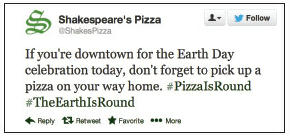
- Example of good content on Twitter: Shakespeare Pizza related pizza to the planet on Earth Day.
Tip #11: Cross-pollinate. If you have a good following on one platform, use it to advertise your presence on a platform where your following is smaller.
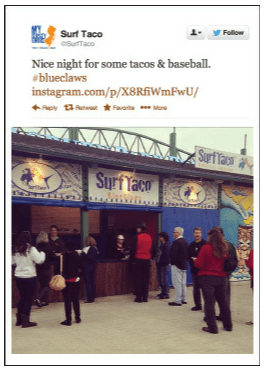
- Example of good content on Twitter: Surf Taco has a Twitter following that’s almost 13 times larger than its Instagram following. On Twitter, they linked to an Instagram photo. (Note—Twitter has cut off Instagram integration due to competition, so Instagram photos don’t load natively anymore.)
Exercise: Assess Content
There are six rules and 11 tips for creating great social media content.
Below is a Facebook post from Selena Gomez. What did she do right? How? (Think about how native the post is, her choice of image, her use of text, and so on.)

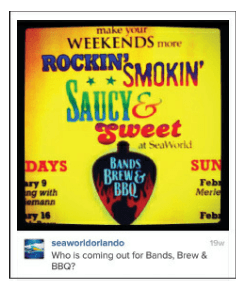
Below is an Instagram post from Seaworld. What did they do wrong? How? (Think about their mobile optimization, call to action placement, image quality, and so on).
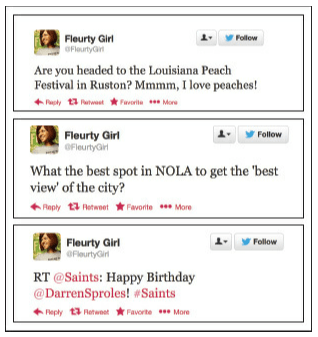
Below is a tweet from a store called Fleurty Girl. What did they do right? How could they improve?
Chapter 3: How to Best Use Facebook
We’ve discussed the marketing techniques that apply to any social media platform. Now, we’ll explore platform-specific techniques. Each platform has its own features, and native content looks different on all of them.
In this chapter, we cover how to best use Facebook for marketing purposes. In subsequent chapters, we’ll cover how to use other platforms.
Facebook is a social media site that allows users to share text, photos, and videos with their network. Most marketers use Facebook, even if they’re not on board with social media in general, because it has such a huge audience.
The audience: As of December 2012, there were over a billion monthly active Facebook users, and 680 monthly users who accessed Facebook on their mobile devices. Facebook is responsible for 20% of page views in the US.
Who uses it: Facebook is used by almost everyone.
Why they use it: People go on Facebook because they want to find out what people they know are doing and socialize.
Notable Features
Facebook has several features that distinguish it from other social media platforms:
Feature #1: Advanced analytics. Studying Facebook’s analytics can tell you a lot about how people work, and you can use this data to make your content more effective.
Feature #2: Huge amount of content. Part of the reason Facebook is such a good marketing tool is that there are so many people on it. However, all of these people create content yours has to compete with.
Feature #3: Free targeting functionality. Facebook offers settings that allow you to make certain posts visible to only a certain demographic, which is ideal for right hook posts. You can see in real-time if people are seeing and engaging with the posts as they like or comment.
- For example, if you’re posting about a sale on handbags, you can make it visible only to a particular demographic you think is likely to buy a handbag, say, 20-to-30-year-old women. If you only post to people who will probably be interested, you’ll get a higher percentage of engagement (shares and so on). The more engagement you get, the more people will see the targeted post.
Feature #4: Use of curating algorithms. Facebook doesn’t want users to see posts they’re not interested in (because if they get bored they’ll leave the site), so Facebook uses algorithms to curate people’s News Feeds.
- For example, even if someone already likes your brand page, they won’t necessarily see your posts. Only 3-5% of your content shows up on your fans’ News Feeds organically (showing up “organically” happens when no one shares the story or you don’t pay to make it more visible.) As a result, if you want to reach a larger audience, you have to either pay or create content that’s engaging enough to be shared.
EdgeRank
EdgeRank is a Facebook algorithm. (Shortform note: EdgeRank hasn’t been in use since 2011, but we’ll discuss how it works as an example of how algorithms can affect post visibility. For more recent information on Facebook’s algorithms, read this Hootsuite blog post.)
EdgeRank tracks users’ engagement with content (liking, sharing, commenting, and following posted links). When there’s a lot of engagement with a particular type of content, EdgeRank shows the users similar content. (There’s a randomizer so that sometimes, users will see a post from an account they haven’t engaged with recently.)
- Example #1: If your fans share your brand’s posts, EdgeRank will show fans more posts from your brand.
- Example #2: If you comment on a lot of your friends’ status updates but not their photos, EdgeRank will show you more status updates and fewer photos.
Facebook doesn’t know which of liking, commenting, or clicking most strongly indicates a user’s interest in your content. As a result, EdgeRank weighs jabs and right hooks evenly and doesn’t consider click-throughs, which lead to sales, as indicative of more engagement than liking a post.
- For example, if you post a link to a product page and sell 50,000 products in twenty minutes, EdgeRank will notice the activity and curate the post onto your current fans’ News Feeds. However, if no one likes, comments, or shares that post, it’ll never be visible outside of your current community no matter how many people click through.
To best use Facebook, you have to consistently throw jabs that people want to engage with so that EdgeRank thinks your content is valuable and interesting to a wide variety of people. Then, when you do throw the right hook, EdgeRank sees that the post came from you, an interesting user, and boosts the post’s visibility, even if that particular right hook is less engaging than the jabs that came before.
Facebook is constantly changing—perhaps in the future, its algorithms will weigh purchases as the strongest version of engagement. Facebook wouldn’t survive if all of its content was right hooks, however, so the author suspects it’ll keep guarding its users’ News Feeds carefully.
Creating Engaging Content
We’ve established that your content has to be engaging to be visible on Facebook—so how do you create engaging content? The same way you engage with people in real life—you find out what they’re interested in and then talk to them about it.
For example, no matter what you’re selling, one of your jabs could be to ask your customers who their favorite recording artists are. Say 70% of your audience loves Adele. When there’s news about Adele, if you post about it, people will interact with that post. You’ll look like a human being and entertain people, and Facebook’s algorithm will note the interest in a post from your brand. Your next post, which can be more product-related, will show up in more people’s News Feeds.
Paid Advertising on Facebook
In addition to creating engaging content, you can purchase advertising to increase your brand’s visibility. Facebook has two types of ads: the ones that show up on the right side of the screen, and sponsored stories.
Type #1: Right-Side Ads
These ads show up on the right side of the screen when viewing the desktop version of Facebook. They used to be a good investment—you pay only when someone likes the ad and likes cost between $0.10 and a few dollars depending on your campaign.
As of 2013, however, these ads aren’t as useful because they only show up on the desktop version of Facebook, and more and more people are accessing the site on their mobile devices.
Type #2: Sponsored Stories
Sponsored stories appear in the News Feed and look similar to user-generated Facebook posts. There are two kinds of sponsored stories:
- Page Posts. Page Posts display your content to more than the 3-5% of News Feeds that would normally show it.
- Stories that highlight engagement. These stories display engagement with your content (likes, check-ins, and so on) to more than the 3-5% of News Feeds that would normally show it.
- For example, if a fan checks in to your cafe, you can pay to have that interaction show up in their friends’ News Feeds.
You can turn a regular post into a sponsored story whenever you like, which allows you to test content before you pay to have its reach extended. If your content is already getting a lot of engagement, you know it’s good and worth pushing further.
Facebook assesses the fee for a sponsored story based on who you’re competing with, how much they’re willing to pay, and how much you’re willing to pay. If your ad is engaging, Facebook will prioritize yours over your competitors’ and charge you less for each interaction. As people engage, Facebook will show the ad to more of them.
If your sponsored story isn’t engaging, Facebook tells you and axes it. Facebook wants your money, but it also wants its users to have good content because if they get bad content, they’ll stop visiting. This functionality can save you a lot of advertising dollars—no TV network would ever tell you your ad is bad and a waste of your money.
Once people engage with your content, Facebook algorithms believe people are interested in your brand, so you’ll get better visibility on your next regular (free) post.
Tips for Creating Good Facebook Content
To create effective and engaging Facebook content, use the following tips:
Tip #1: Choose the correct format. On Facebook, you can create a link-based post, which shows a small photo beside the link, or a photo-based post, which prioritizes the photo. Choose appropriately.
- Example of bad content: When Air Canada’s first flight attendant died, the company posted a link to an interview with her as a link post. They should have used a photo post because her headshot was striking and deserved to be featured.
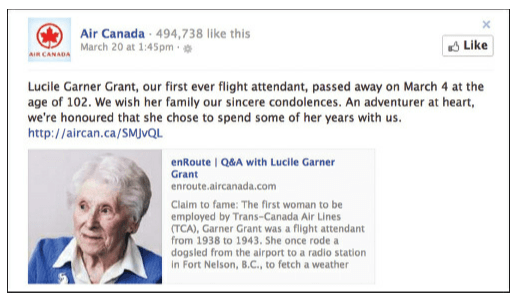
- (Shortform example of good content: Subaru appropriately chose a photo post to share a link to more information about one of their vehicles. The image showed a car facing off against a helicopter.)

Tip #2: Optimize for mobile. More people are accessing Facebook sites on mobile devices than ever.
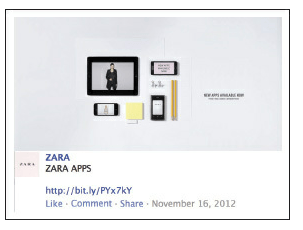
- Example of bad content: Zara posted a photo with overlaid text that was too small to be legible on a mobile device.
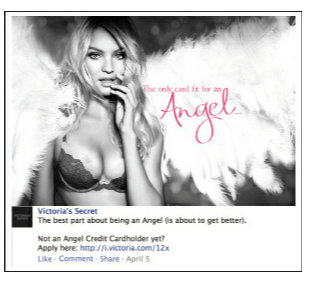
- Example of good content: Victoria Secret posted a photo that had the text overlaid across the center so that it wouldn’t be cropped by the smaller mobile screen. The text was also large, legible, and in a bright color.
Tip #3: Regulate the comments section. Many people try to piggyback on popular fan pages to sell their own products or business, which is content that people aren’t interested in, so you need to remove it. You also need to respond to people’s comments and questions.
- Example of bad content: The comments section of Lil Wayne’s Facebook page is full of people pitching their own businesses and pages—content his fans aren’t interested in.
- Example of good content: Amtrak posted a picture of two train seats and asked people who they want to travel with. When one fan wrote that he wanted to go with Justin Bieber, Amtrak responded by asking where Selena Gomez would sit.

Exercise: Assess Your Facebook Posts
Facebook is one of the most popular social media platforms, so it’s important to use it effectively.
Navigate to or recall one of your brand’s recent Facebook posts. Is it a link post or a photo post? Why did you choose the option you did?
How have you optimized, or how could you optimize, the post for mobile?
What appears in the comments section? (For example, do the comments include questions, positive or negative feedback, or spam?) How could you respond to some of the recent engagement?
Chapter 4: How to Best Use Twitter
Like Facebook, Twitter is a popular social media site with a large audience. Twitter is a microblogging platform and posts are called “tweets.”
The audience: As of December 2012, there were 500 million Twitter users worldwide. 750 tweets are posted per second.
Who uses it: The Twitter demographic is young and urban.
Why they use it: Twitter is mainly used to share information and news.
Notable Features
Twitter has several features that distinguish it from other social media platforms:
Feature #1: Mobile friendly. Twitter is one of the most mobile-friendly platforms.
Feature #2: Very public. Twitter is almost completely public. Most tweets are public to the entire internet, even to people who don’t have accounts, and anyone who does have an account can usually talk to anyone else with an account, regardless of whether or not they’re following each other. (On Facebook, Instagram, and Tumblr, you can only talk to people once they’ve decided to follow you.)
Feature #3: Huge potential for community engagement. Because Twitter’s so public, in addition to responding to customer’s tweets about your brand, you can initiate conversations with potential new customers. Twitter’s search engine is powerful and you can use it not only to find people directly talking about your brand but people talking about things only distantly related to you.
- For example, one day a man named Levi Lentz tweeted to say that Michael Franti’s “Say Hey” was one of his favorite songs. Green Mountain Coffee responded to the tweet to say that they loved it too. There was a connection between Green Mountain Coffee and Franti—they were working on a fair trade campaign—but it wasn’t public yet, so it looked to Lentz like the coffee company just wanted to have a conversation. (In Twitter culture, it’s not unusual to spontaneously talk to people you’ve never met.) Eventually, Lentz brought up coffee. Green Mountain gave him coffee recommendations and mailed him a Michael Franti CD. Lentz wrote about the encounter in his blog and the company sent him a thank-you note, coffee sample, and mug. All of this engagement stemmed from a tweet Lentz never expected to start a conversation with a brand.
Feature #5: Retweeting features. On Twitter, you can retweet (reshare) other people’s tweets. This allows you to rework other people’s content instead of having to come up with your own.
Feature #6: The importance of context over content. Like Facebook, there’s an overwhelming amount of content on Twitter, and if you’re only tweeting about your products, you’re not going to stand out. You can stand out by putting your own spin on the news and augmenting existing content with commentary, humor, or voice. People want escapism and entertainment—information that’s also entertaining.
- For example, say you run a bookstore. When a newspaper releases a review of a book you sell, you might tweet a sentence along the lines of, “Check out this review of The Italian Pig from The New York Times” and include the link to the review. Or, you could write something like, “The New York Times loves it. We hate it. Find out why.” This tweet would be linked to your blog, which would have the full text of the review and your thoughts on it. (The author writes that criticizing something he sold never hurt his sales when he was in the wine business; in fact, it made people trust him.)
Feature #7: Trend-tracking features. Trends are words, topics, and hashtags that are popular at any given moment. You can use settings to track trends (at levels ranging from regional to worldwide) and then use that knowledge to post timely content with appropriate context.
- For example, the day after the finale of the TV show 30 Rock, the show’s name was trending. A brand could have told their story within that context by looking for a connection between themselves and the show. The show aired for seven years, so any company with the number “seven” in their name, for example, 7 For All Mankind, might have used that connection to show that they were aware of the things their fans were interested in. 7 For All Mankind missed the opportunity, though—their Twitter page that day was full of brags, right hooks, and some customer engagement.
Common Mistakes
In addition to missing opportunities, there are two common mistakes people make with Twitter. These are the overuse of:
- Pushing content. Most marketers tweet links to content that’s somewhere else, such as their blog. This doesn’t make use of Twitter’s unique features or give users the type of content they want.
- “Birdiebragging.” Birdiebragging is a term the author came up with to describe bragging by retweeting nice things your customers have said about you. Few people find bragging to be engaging content.
Paid Advertising on Twitter
Like Facebook, Twitter provides paid advertising that you can use to boost the visibility of your brand, in the form of promoted tweets. Promoted tweets are clearly labeled “Promoted” and are given more visibility than other tweets, for example, by appearing at the top of relevant search pages. Like any tweet, a good way to use a promoted tweet is to find a link between a trending hashtag and your brand. For example, on National Wear Red Day, #GoRed was trending, and Tide bought a promoted tweet that referenced the color-saving features of its detergent.
Tips for Creating Great Twitter Content
To create effective and engaging Twitter content, use the following tips:
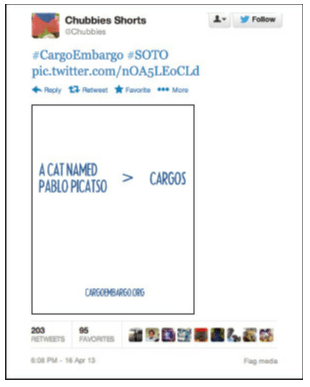
Tip #1: Use memorable and idiosyncratic hashtags. Hashtags only work if they’re well-chosen—they need to fit the voice of your brand and be native to Twitter. For example, while many users on Twitter appreciate and make use of irony, if irony doesn’t suit your brand and you try to use it anyway in your hashtags, you’re going to confuse your audience or look out of touch.
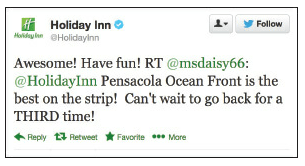
- Example of bad content: The Holiday Inn tweeted a birdiebrag and didn’t include any hashtags at all.
- Example of good content: Chubbies, a shorts company, came up with #CargoEmbargo and #SOTO (stands for Skies Out Thighs Out), two concepts that are specific to shorts.
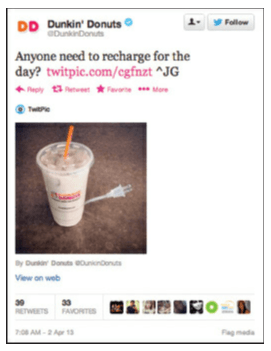
Tip #2: Pay attention to voice. Your voice should sound like your brand and be appropriate to the Twitter audience (which, as noted in Tip #1, tends to enjoy irony).
- Example of bad content: Dunkin Donuts posted a tweet that was signed “JG.” Your voice needs to be unified, so only post from the point of view of your brand, not a specific employee. (If JG leaves the company, the tweets can no longer be signed with the initials.)
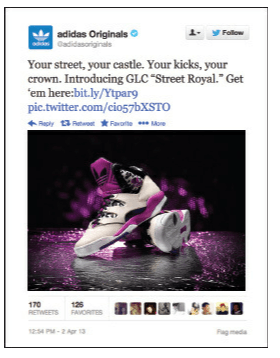
- Example of good content: Adidas wrote a tweet in which their call to action was in the same voice as the rest of their copy. Often, companies get too formal when they throw the right hook.
Tip #3: Break the news first. If you can release news people are interested in before anyone else does, it’ll be your tweet that’s reshared as the news goes around.
- Example of good content: EA Sports FIFA, a video game brand, announced the soccer teams who would play in the semifinals of the UEFA Champions League. Many people learned the news from this tweet first, and many people retweeted the post.

Tip #4: Trendjack. Trendjacking refers to using hashtags that are trending to boost the visibility of your tweet. Twitter users regularly look through the list of posts that use the trending hashtags, and if you use a trend, your tweets are more likely to be seen by people outside your existing network.
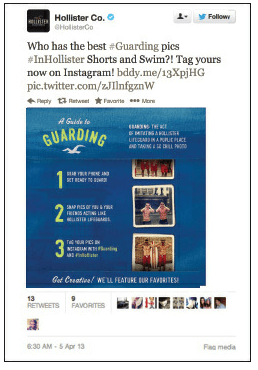
- Example of bad content: Hollister tried to create their own hashtag, #guarding. #guarding was already being used by teenage basketball players and security guards, so it wasn’t distinct enough to be associated with their brand. Additionally, it’s very hard to come up with a hashtag that will go on to trend and attract people to you. It’s much easier to look at what’s already trending and then use that to interact with others.
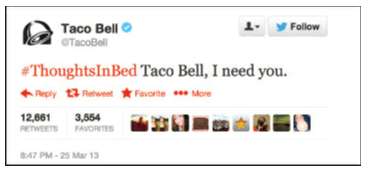
- Example of good content: When the hashtag #ThoughtsInBed was trending, Taco Bell tweeted that a possible thought in bed was the need for Taco Bell, which a lot of people found funny enough to interact with.
Exercise: Assess Your Tweets
Twitter is one of the most popular social media platforms, so it’s important to tweet effectively.
Navigate to or recall one of your brand’s recent tweets. What hashtags did you use, if any? What memorable and idiosyncratic hashtags could you add to strengthen the tweet?
What’s the voice of the tweet? How could you align it more with your brand identity? How might you amend it to match the voice of native Twitter content (for example, by using irony, if appropriate)?
Look at the hashtags that are currently trending. How could you relate one of these to your brand to trendjack? What would your trendjacking tweet say?
Chapter 5: How to Best Use Pinterest
Unlike Twitter and Facebook, Pinterest is a very visual platform. Pinterest is a social bookmarking site that allows people to save images they like, and ideas associated with the images, into collections. Posts are called “pins” and collections are “boards.” Every brand should get on Pinterest, even if your product isn’t particularly image-worthy.
The audience: By 2013, Pinterest had 48.7 million users. While it’s only slightly less popular than Twitter, marketers have been reluctant to get on it for two reasons:
- They’re already busy with other social media sites.
- It encourages you to share images you don’t own, which people initially thought might create copyright infringement. Pinterest has since revised its terms and put in business features to make it more attractive, and no one has ever been sued.
Who uses it: The majority of Pinterest users are women. Many parents use Pinterest—half of Pinterest users have children.
Why they use it: Pinterest was initially used to share fashion, food, and home decor ideas, but now people use it to share all sorts of hobbies. People like Pinterest because it’s aspirational—people pin images of what they’d like their lives to look like, not actually what they are.
Notable Features
Pinterest has several features that distinguish it from other social media platforms:
Feature #1: Purchase-friendly. A Steelhouse study found that users are almost 80% more likely to buy something they see on Pinterest than Facebook. Twitter produces only a quarter of the revenue-per-click of Pinterest.
Feature #2: Distinction between boards and brand pages. People can follow your collections separately from your brand, so you have more freedom to explore your brand’s identity.
For example, if you’re a coffee company, you could create boards directly related to your product (for example, boards for Dark Roast, Decaf, and so on), tangentially related (for example, a board for coffee date outfits), or not at all related (for example, movies and books).
Feature #3: Support for comments. Comments are a new Pinterest feature that not many people are taking advantage of yet (as of 2013), so if you start using them, you’ll stand out. Like you would on Twitter, talk to people about their interests. Whenever you engage, you encourage people to look at your brand page to learn about you.
Feature #4: Support for captions. You can accompany all your images with custom captions or descriptions.
- For example, if you sell coffee and you caption a photo “Morning-after coffee saves the day again,” the caption might encourage people to comment on what they got up to on Friday night. This will encourage people to repin your posts onto their own boards, where more people will see them.
Feature #5: Repinning functionality. Like Twitter, you can reuse and upcycle other people’s content. This might not help you make sales, but it’s good for building relationships and establishing trust.
- For example, a coffee company might create a board called “Coffee Accessories” and repin a photo of a coffee pot with a short review of it.
Feature #6: Rabbitholing opportunities. Most people on Pinterest don’t go directly to a brand’s page; they arrive there by clicking on images they’re interested in that eventually lead to the page. People have the potential to end up on your brand page no matter what board they initially started at.
Tips for Creating Good Pinterest Content
To create effective and engaging Pinterest content, use the following tips:
Tip #1: Post aspirational images. People use Pinterest because they want to imagine what their lives could look like, so use aspirational images to create native content.
- Example of good content: Whole Foods pinned a photo of a pantry in a mansion, which suggested that all their customers deserved to be the kind of people who had access to fancy pantries.

Tip #2: Give your boards and photos good titles and descriptions. Good titles and descriptions will help people find images and understand what they’re looking at and how they might relate to it.
- Example of bad content: UNICEF posted this photo of a child who has AIDS to two boards, “Can You See Me?” and “Nonprofit Media.” Neither of these board titles explain what content the boards contain, and neither title sheds any light on the content of this particular image. UNICEF should have instead posted this image to a board with a title related to helping orphans or people with AIDS.

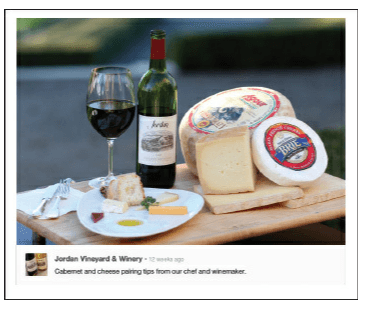
- Example of good content: Jordan Winery pinned a photo of wine to a board called “Wine 101,” which shows that the company caters to people with all levels of wine experience.
Tip #3: Use high-quality images. Good imagery is important on all social media sites but particularly Pinterest because it’s so image-based. Ask yourself if the image in the pin is high-quality enough to be printed in a magazine. If it isn’t, don’t post it.
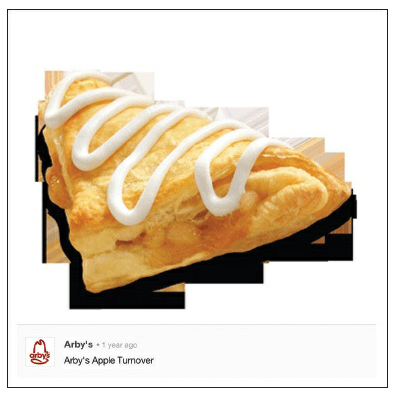
- Example of bad content: Arby’s pinned a badly cropped photo of an apple turnover that makes it look unappetizing.
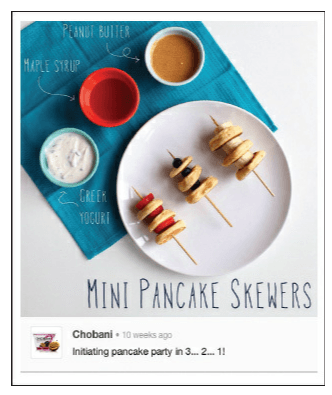
- Example of good content: Chobani pinned a high-quality photo of pancakes that’s meant to appeal to parents.
Tip #4: Categorize images so people don’t have to debate where to repin. The easier you make engagement, the more likely people are to do it.
- (Shortform example of good content: Target pinned this image to a board called “Target Baby,” which clearly tells people that the image is related to baby products available at Target.)
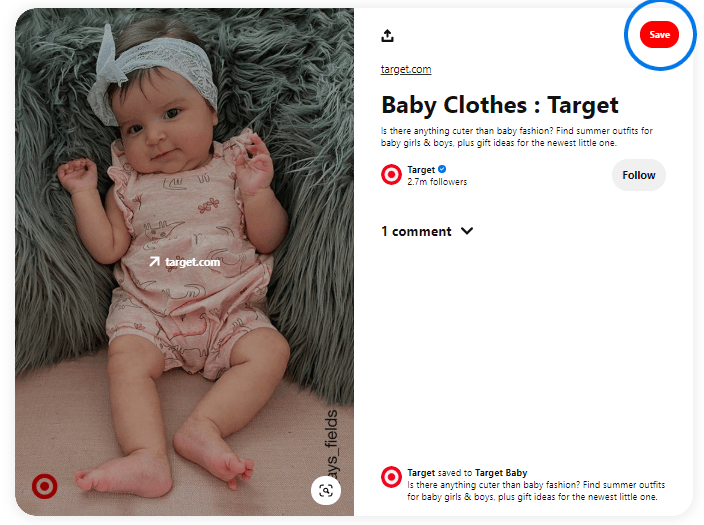
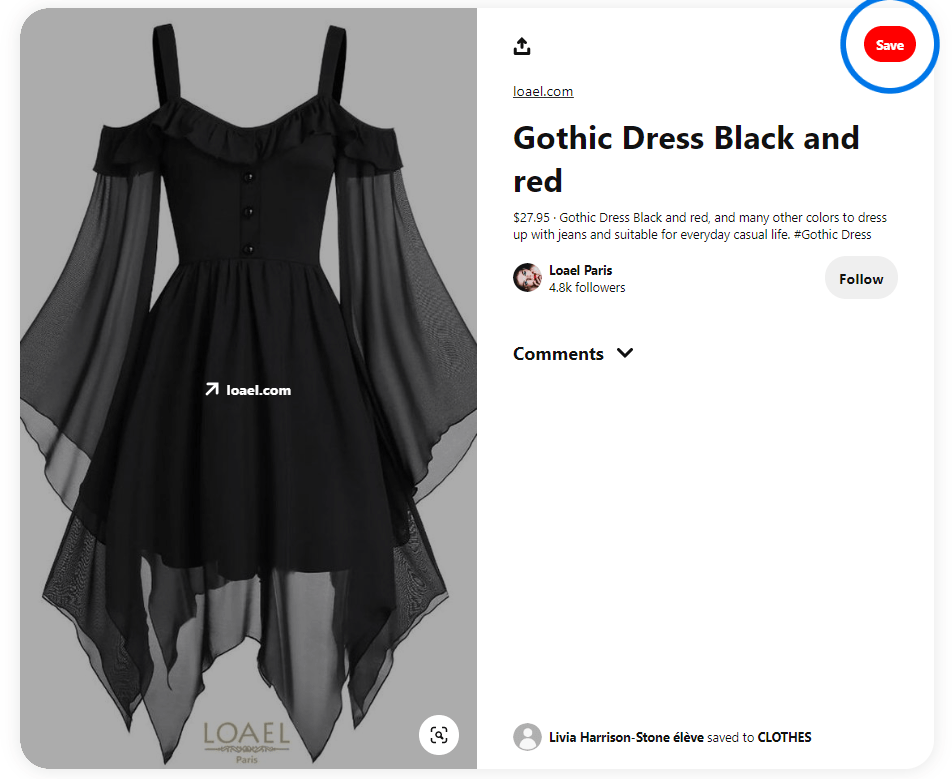
Tip #5: Include a price. While including a price is advantageous on most platforms, it’s particularly powerful on Pinterest—including a price will increase your likes by 36%.
- (Shortform example of good content: Loael posted a photo of a dress with the price in the copy.)
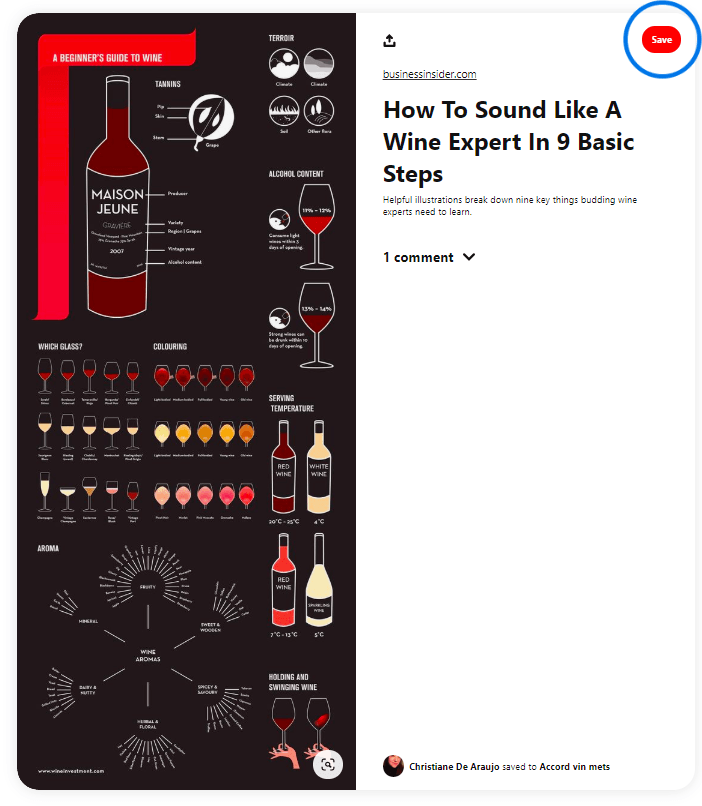
Tip #6: Use infographics. Infographics are popular and create engagement.
- (Shortform example of good content: Business Insider posted an infographic about how to talk about wine.)
Exercise: Brainstorm Pins
Pinterest is a quickly growing social media platform, so you should consider setting up an account if you haven’t already.
People use Pinterest because they want to imagine what their lives could look like. If you were to take a photo of your product to use in a pin, how would you make the image aspirational? (For example, could you make the photo convey luxury or high status?)
What would you write as a description for this photo? What board would you pin it to, and why?
Infographics—for example, charts or diagrams—are popular on Pinterest and create engagement. How could you create a brand- or product-related infographic?
Chapter 6: How to Best Use Instagram
Like Pinterest, Instagram is a very visual platform. Instagram is a photo and video-sharing social media platform that’s owned by Facebook. Images are becoming more popular than text and will be the future of social media.
The audience: In December 2012, there were 130 million monthly active users. Users upload 40 million photos a day and there are 1,000 comments per second.
Who uses it: Instagram is a young person’s app. Kids are on Instagram while their parents are on Facebook.
Why they use it: Instagram is a consumption platform. People want to look at each other’s high-quality photos—photos often tell a story better than words. Additionally, Instagram has unique photo-editing capabilities.
Notable Features
Instagram has several features that distinguish it from other social media platforms:
Feature #1: No reposting. You can only post your own content, not reshare other people’s. However, you can get around this by using outside apps, or by screenshotting a post and then posting the screenshot.
Feature #2: No linking. Posts can’t be linked to outside sites. However, you can get around this by putting a URL into the photo’s description. It won’t be as effective as if the link was direct, but people will figure it out, and you can encourage them to go to the trouble of copy/pasting by giving discount codes.
Feature #3: Integration with other social media platforms. Users can connect their Instagram accounts to Twitter and Facebook and post images to all three platforms at once.
Feature #4: “Baked-in utility.” Baked-in utility means a platform is good at what it’s designed to do. Instagram is designed to help users take good smartphone photos.
Feature #5: Explore. Explore is an Instagram page that features the best content on the site. If you can get your content featured on Explore, its visibility increases exponentially—everyone, not just your followers, will see it.
Tips for Creating Good Instagram Content
To create effective and engaging Instagram content, use the following tips:
Tip #1: Use hashtags freely. On Twitter, hashtags are used sparingly for humor and irony, but on Instagram, use as many as you want because they’re how people find your posts (clicking on a hashtag brings users to a page of all the images that use that hashtag). You can place the hashtags in either the photo description or a comment on the photo.
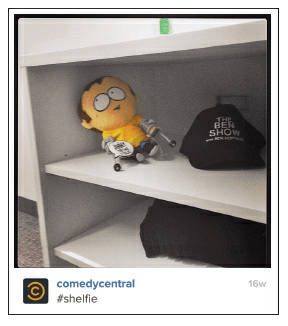
- Example of good content: Comedy Central shared a photo of some of their merchandise on a shelf and included the hashtag #shelfie, which is a pun on the popular #selfie tag.
Tip #2: Cater to the younger generations. Many people on Instagram are young.
- (Shortform example of good content: CosmoGirl! Magazine posted celebrity gossip about a popular actress in a high-school TV show.)

Tip #3: Create holiday-themed content. Holiday-themed photos tend to create engagement because they evoke excitement and nostalgia.
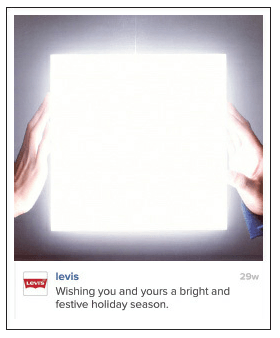
- Example of bad content: Levi’s posted a photo of a square light for the holiday season. The image looked like a stock photo and had nothing to do with jeans or the holidays.
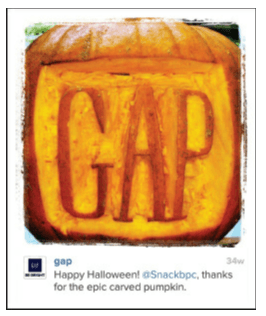
- Example of good content: Around Halloween, Gap posted a photo of a pumpkin that had “Gap” carved into it.
Tip #4: Use high-quality, indie, artsy photos. Good photos are important on all social media platforms, but especially on Instagram, because, like Pinterest, it’s a visual platform. People don’t visit Instagram to see stock photos and ads.
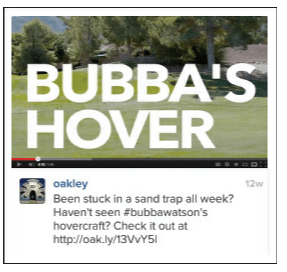
- Example of bad content: Oakley shared a low-quality screenshot of a video of a hovercraft golf cart. They wanted to get people to watch the video (this was before you could share video on Instagram), but since you can’t link out of Instagram, it wasn’t very effective. They should have used a good photo of the hovercraft instead.
- Example of good content: Guthrie Green Park regrammed a dramatic sunset photo one of its followers posted.

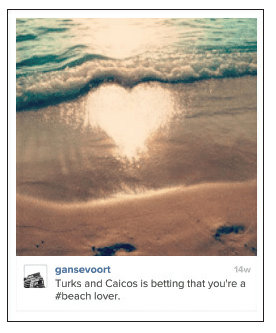
Tip #5: Pay attention to placement. For example, if your image has a heart in it, crop the image so that the heart of the “like” button lines up with it.
- Example of good content: Gansevoort Hotel posted a photo of the ocean rolling onto the beach with the sun reflecting on it in the shape of a heart. When users roll their mouse over the photo to like it, the “like” heart lines up with the heart in the photo.
Exercise: Assess Your Instagram Posts
Instagram is one of the fastest-growing social media platforms, so it’s important to know how to use it effectively.
Navigate to or recall one of your brand’s recent Instagram posts. Is the photo high-quality, indie, and/or artsy? Why or why not? How could you retake or edit the photo to make it more native?
What hashtags did you use in the post, if any? What additional hashtags could you use to make it easier for people to find your content?
How could you edit the post to make it more appealing to the younger generation? (For example, could you link the post to a trend that’s currently popular with young people?)
Chapter 7: How to Best Use Tumblr
Unlike the other platforms mentioned above, Tumblr wasn’t originally a social media platform, but a blogging platform. In January 2012, Tumblr redesigned its dashboard to become more social.
The audience: Tumblr has 132 million monthly users as of June 2013 and every day, 60 million new posts go up. Tumblr’s not as big as some of the other platforms, but your brand should still have a presence on it.
Who uses it: Tumblr is mainly used by 18-to-34-year-olds. Slightly more women than men use it, and many artists use it. The tone is urban, ironic, and hipster.
Why they use it: Tumblr is more a publishing platform than a consuming one, but people do consume media on it, and quickly.
Notable Features
Tumblr has several features that distinguish it from other social media platforms:
- Customizable homepage. Unlike Twitter or Facebook, you can choose your art, logo placement, color, format, and font, which allows you to better express your brand’s identity.
- Interest-based connections. Connections are made based on interest, not who you already know. If you post content people are interested in and tag it appropriately, they’ll find it, whether or not they follow you.
- GIF support. GIFs are soundless videos that play on a loop without having to be clicked. They can be either animated or live-action and often captioned. (Shortform note: In 2013, when Jab, Jab, Jab, Right Hook was published, Tumblr was the only platform that supported GIFs. Today, most of the platforms listed in this summary support them too.)
- (Shortform example: Find many GIFs here.)
- Relatively new. Fewer businesses are on Tumblr than other platforms, so you have a chance to corner the market before your competitors arrive.
Tips for Creating Good Tumblr Content
To create effective and engaging Tumblr content, use the following tips:
Tip #1: Customize your homepage to showcase your brand identity.
- (Shortform example of good content: The New Yorker’s homepage uses its iconic font and cartoons to show off its identity.)
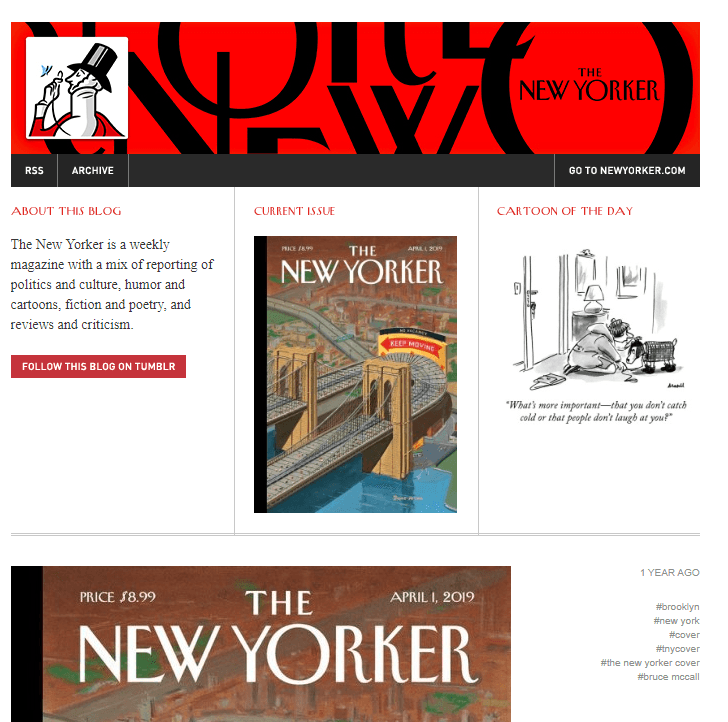
Tip #2: Use GIFs. GIFs are popular with Tumblr users, so if you use them too, your content will be more native and interesting.
- Example of bad content: Smirnoff posted a boring, still product photo of a Smirnoff bottle.
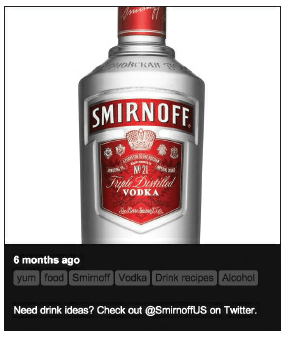
- Example of good content: NPR’s Fresh Air talk show posted a GIF of a scene from A Room with a View to commemorate the death of the screenplay writer.
Tip #3: Be cool. Tumblr’s audience is young, cool, and interested in exclusive content.
- Example of good content: Life magazine posted a never-before-seen image of Marlon Brando on his birthday.

Tip #4: Consider black and white images. Black and white images can be dramatic.
- (Shortform example of good content: Taylor Swift posted a dramatic black and white photo to promote her new album.)

Tip #5: Use appropriate tags. Tags help people find your posts.
- Example of good content: GQ posted a photo of Mad Men characters at a cocktail hour just before the sixth season premiered. They tagged the post with the name of the show, the names of characters, and “television.”
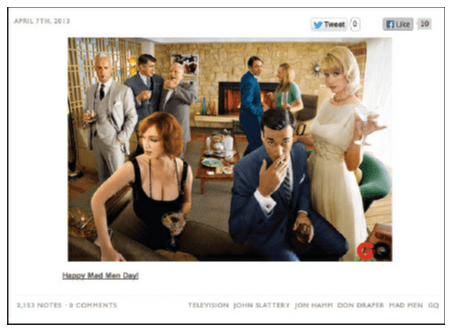
Exercise: Brainstorm Posts
Tumblr is a smaller but still important social media platform, so you should consider setting up an account if you haven’t already.
Brainstorm a possible Tumblr post about your brand or product. What would the topic of the post be? What media could you include? (Consider both images (especially black and white images) and GIFs.)
How could you make the post cool to appeal to the Tumblr audience? (For example, could you include exclusive information, or reference a current pop culture trend?)
What tags would you use to ensure that users find your post?
Chapter 8: Up-and-Coming Platforms
In this chapter, the author covers four platforms that weren’t very social at his time of writing, but that he believed had the potential to become social as users demanded this functionality from everything in their lives.
(Shortform note: Two of the platforms the author mentions in this chapter—Google+ and Vine—are no longer operational. However, we’ve included information on them to give an insight into the types of content that the author thought would become popular.)
LinkedIn is a business-oriented site that allows professionals to network with each other. It also allows people to share samples of their work, articles, and reviews.
The audience: In 2013, LinkedIn had 200 million members. Over 2.8 million companies have a company page.
Who uses it: LinkedIn is used by students, college graduates, Fortune 500 company executives, and many other professionals.
Why they use it: People use LinkedIn to make professional connections, find jobs, find employees, and learn about the workplace.
Notable Features
LinkedIn has several features:
- Access to a professional audience. B2B marketers, who sell directly to businesses, can more easily access their customers on LinkedIn compared to other social media platforms.
- Less content. Because LinkedIn is a business site, there’s less distracting, non-professional content to compete with.
- Support for long-form copy. LinkedIn allows for long copy because people who go to LinkedIn are seeking information.
Google+
Google+ is a social network that’s similar to Facebook. The audience: 500 million users have Google+ accounts, however, many of these users aren’t active. Anyone who uses any of Google’s other products, such as YouTube, is automatically assigned a Google+ account.
Who uses it: Early tech influencers use Google+. Few other people use it because it’s so similar to Facebook.
Why they use it: Early tech influencers are on Google+ because they hope it might take off.
Notable Features
Google+ has several features:
- Higher-ranked search results. Google’s search prioritizes its own products, so your Google+ marketing will come up higher in a search than posts on other platforms.
- Google Glass features. If Google Glass replaces mobile phones, Google could make Google+ the only platform on which Glass content could be viewed and shared.
Vine
Vine is a platform for sharing six-second looping videos. At the time the book was published, Vine had just come out and was too new for the author to have a lot of advice about it.
The audience: Vine had 13 million users as of June 2013, six months after it was launched.
Who uses it: Vine is popular with 8-to-21-year-olds. The author predicts the demographic will expand.
Why they use it: Vine provides a variety of content, and the content is short so people don’t feel like they’re going to get sucked in.
Notable Features
Vine has several features:
- Time limit. Many people don’t want to watch videos because they don’t know how long they’ll take, but because Vine limits all videos to six seconds, there’s little commitment.
- Forced creativity. The six-second limitation forces marketers to be creative. The best videos are edited instead of the whole video being one six-second take.
Snapchat
Snapchat is a platform that sends photos and videos that self-destruct after being viewed or watched. A message is called a “snap.”
The audience: As of February 2013, people sent 60 million snaps per day. (Shortform note: Unlike for other platforms, the author didn’t give the number of Snapchat users.)
Who uses it: Snapchat is popular with young people.
Why they use it: Snapchat has a reputation for being used for sexting, but in fact, it’s more commonly used for sharing jokes. People want quick laughs.
Notable Features
Snapchat has one notable feature:
- Attention-grabbing. Since each snap is only visible once, customers pay more attention to it.
Exercise: Consider New Platforms
Early adopters of new platforms have the opportunity to corner a market before other businesses get around to building their presences.
What’s a social media platform that your brand doesn’t have a presence on yet? What’s holding you back?
Do your competitors have a presence on this platform?
How might you start using this platform? (For example, what content might you include in your posts? What audience might you target?)