1-Page Summary
When L. David Marquet became captain of USS Santa Fe in 1999, it was the worst-performing nuclear-powered attack submarine and crew by Naval standards. In a year, he turned the crew into one of the best by replacing the military’s traditional “leader-follower” or command-and-control structure with a “leader-leader” organizational model. Turn the Ship Around! is the story of how he did it. Its lessons are applicable to any organization—business, nonprofit, or government.
In short, the “leader-leader” model allows staff to take responsibility for problems and solutions rather than waiting to be told what to do. As a result, team members see themselves as leaders instead of followers.
The Leader-Follower Model
The traditional leader-follower model practiced in the U.S. Navy and most companies and organizations assumes there are two types of people: leaders who make decisions and followers who implement them.
This has been the basis of our thinking about leadership for hundreds of years because it has worked. It’s responsible for successes ranging from the construction of the pyramids in ancient Egypt to the factories of the Industrial Revolution.
However, the leader-follower structure was designed to coordinate physical labor for various purposes, whether building pyramids and roads, or mining coal. In contrast, many of today’s employees are knowledge workers who work independently to develop and apply information. The leader-follower model doesn’t manage cognitive work effectively.
People who are treated as followers become passive. With scant decision-making ability, they have little motivation to contribute their ingenuity and energy.
The Leader-Leader Model
The leader-leader structure is based on a different assumption about people: everyone can be a leader, and an organization is most effective when everyone thinks and acts like a leader.
The leader-leader model treats employees as valued assets, which increases individual motivation and organizational success. Also, the improvements that come with the leader-leader model are lasting because they’re not dependent on one leader’s skill or personality. Leaders develop throughout the organization.
A Leadership Revolution
With little room for error, a nuclear submarine is an unlikely setting for trying out a new leadership model. But to turn around the beleaguered Santa Fe, Marquet felt he had no other option.
When he took over as commander, Marquet had six months to get the submarine ready for deployment. Santa Fe was to join a battle group for a torpedo exercise in the Arabian Gulf intended to demonstrate combat effectiveness. Marquet needed to radically change the way officers and crew operated.
Marquet’s goal was to create a leader-leader structure by pushing control—the authority to decide what to do and how—downward to the officers and crew. He started in the middle of the operation with the 12 chiefs, the senior enlisted personnel equivalent to middle managers, who supervised the crew members responsible for day-to-day maintenance and operation of the submarine.
Although there’s a Navy axiom that “the chiefs run the Navy,” they lacked true authority. By instituting a “Chiefs in Charge” program, Marquet made the chiefs accountable for the performance of their divisions and crew members. The chiefs’ new authority generated excitement and strengthened the connection between the chiefs and the sailors. Both the chiefs and crew became more engaged in their work.
"Mechanisms" for Success
Over time, Marquet and his officers came up with 20 “mechanisms” (Navy terminology for methods practices) to transform Santa Fe from a leader-follower to a leader-leader organization. The mechanisms focused on three key areas:
- Control: Decentralize decision-making to increase the crew’s initiative and motivation.
- Competence: Increase the crew’s technical competence and knowledge so they could make good decisions.
- Clarity: Ensure crew members are clear on the organization’s goals so their decisions align with what Santa Fe needed to accomplish.
Mechanisms for Decentralizing Control
The typical leader-follower structure is designed to push information up the chain of command to the people who make the decisions. In contrast, Marquet pushed control, or decision-making authority, down to where the information originated.
Besides pushing authority downward to the chiefs, here are the other mechanisms or methods Marquet used to spread control throughout the organization:
- Identify practices and procedures embedded in the organization—the “genetic code”—that dictate control and rewrite them.
- Get people to act differently and they’ll begin thinking differently (starting with the “three-name rule.”).
- Have supervisors do brief check-ins to ensure crew members are on the right track so time isn’t wasted.
- Have everyone start conversations with the phrase “I intend to…” instead of asking for permission to do something.
- As supervisors, resist the impulse to jump in with solutions when problems occur. Instead, let crew members decide what to do.
- Eliminate top-down systems for monitoring work. Instead, let crew members take ownership of the work and report their progress.
- Get people to “think out loud” about what they intend to do to clarify the rationale for decisions.
- Welcome inspectors as experts who can help the organization improve.
Of these practices, two stood out as having the greatest impact:
The ‘Three-Name Rule’
Marquet instituted a behavior change for the entire crew that led to changed thinking and morale: the “three-name rule.” This required that when any crew member saw a visitor, he would greet the person using three names: the visitor’s name, his name, and the ship’s name. It would go like this: “Good morning Commodore Kenny, my name is Petty Officer Smith. Welcome aboard Santa Fe.”
Crew members often felt at the mercy of outside factors rather than taking responsibility for making things happen. Practicing the three-name rule helped to break that cycle. By taking the initiative to greet visitors, each sailor was being proactive.
‘I Intend to…’
Marquet also instituted another language change that created a proactive mindset. In the old top-down system, officers and crew asked permission to do things, using “follower” phrases such as: “I’d like to,” or “What should I do about.” Instead, Marquet required everyone to state their intentions rather than ask permission. They would announce, “I intend to…” spelling out what they wanted to do, and Marquet or another officer would respond, “Very well.” Then they‘d proceed with their plans.
In this way, officers and crew took ownership of a situation or problem, decided what to do, and shared their intended actions.
Mechanisms for Increasing Competence
Decentralizing control under a leader-leader system only works when the people receiving increased control have the technical competence or knowledge to make decisions. Marquet and his officers used the following mechanisms to strengthen the crew’s technical competence:
- Take “deliberate action”: Officers and crew pause before acting and state their intentions to prevent acting without thinking.
- Learn constantly: Officers and crew approached every activity as a chance to learn and improve.
- Demonstrate readiness: Instead of listening to a briefing or review of instructions, crew members demonstrate they’re prepared to proceed.
- Repeat the message of change until it fully sinks in. Old habits die hard.
- Specify goals, but let crew members decide the best methods for reaching them.
The mechanisms with the greatest impact on increasing the crew’s competence were: taking deliberate action and demonstrating readiness.
Take ‘Deliberate Action’
This initiative grew out of an error committed by a petty officer, who had acted automatically without thinking and violated a critical safety rule while connecting electrical cables to the submarine when it reached port.
To prevent this from happening in the future, they came up with a procedure aimed at getting people to act thoughtfully and deliberately, called “take deliberate action.” It meant that before taking any operational action, a crew member would pause, verbally state what he intended to do, and gesture toward the controls. The purpose was to engage the operator’s mind and eliminate acting automatically. In turn, this reduced mistakes.
Demonstrate Readiness
Briefings, or the practice of reading procedures out loud before an activity, were a common feature in the Navy. However, they were passive—everyone listened to the instructions; they had no responsibility to prepare in advance, and it was easy to assent without engaging mentally.
Marquet replaced briefings with certifications, in which participants demonstrated their readiness and were “certified” to proceed with a task. During certification, a team leader asked the members questions, then decided whether the team was ready. The certification process required people to actively prepare for their duties and increased everyone’s intellectual involvement in operations.
Mechanisms for Creating Clarity on Goals
Along with competence, a leader-leader model that decentralizes control also requires clarity. Everyone needs to understand the organization’s goals so that the decisions they make align with what the organization is trying to accomplish. If the purpose isn’t clear, the criteria on which decisions are made may be off base, leading to bad decisions.
Here are the mechanisms Santa Fe adopted to ensure clarity:
- Focus on achieving excellent results, not on rotely following procedures in order to avoid errors.
- Take care of your team. Supervisors should build trust and motivation by putting the team’s interests first.
- Be inspired by your organization’s legacy. Create a sense of mission by connecting present efforts with past accomplishments.
- Create guiding principles to aid decision-making.
- Immediately recognize excellent performance.
- Begin with the end in mind: Set long-term goals.
- Encourage questions, not blind obedience.
The most important was focusing on achieving excellence.
Focus on Excellence
The Navy’s submarine force was obsessed with reporting, tracking, and analyzing errors, which created a strong incentive to focus exclusively on avoiding them. When Marquet first took command of Santa Fe, the crew focused on following myriad procedures intended to minimize errors.
While this might have prevented some problems, it was paralyzing and left no room for achieving excellence, which Marquet defined as “exceptional operational effectiveness.” While understanding and minimizing mistakes is valuable, it should be primarily a side benefit of excellence.
Officers helped crew members focus on excellence by creating a set of guiding principles for decision-making, and also by rewarding excellence. However, focusing on procedure to avoid errors proved to be an ingrained habit that resurfaced regularly until the crew developed greater competence and clarity about what they needed to accomplish.
Long-Term Success
Ultimately, Santa Fe’s achievements and innovations under Marquet’s leadership lasted long after his departure and spread throughout the submarine force.
Santa Fe produced leaders in disproportionate numbers compared to other submarines. Twelve years after Marquet took command of Santa Fe, Commander Dave Adams, former weapons officers under him, took charge. Two executive officers were selected to command submarines. Three department heads were promoted to executive officer and then to commanders of their own submarines. Many enlisted men were promoted as well.
In terms of operational performance, Santa Fe won the award for best chiefs’ quarters for seven years in a row and the Battle “E” award for most combat-effective submarine three times in 10 years. Deliberate action was adopted across the submarine force. Two other Santa Fe mechanisms—the “I intend to ..” procedure and certification—were picked up by others.
The leader-leader model is the only one that can produce top performance and long-term excellence. If the model can turn the Navy’s worst-performing submarine into its best, it can work in any organization.
Introduction
When L. David Marquet became captain of USS Santa Fe in 1999, it was the worst-performing nuclear-powered attack submarine and crew by Naval standards. In a year, he turned the crew into one of the best by replacing the military’s traditional “leader-follower” or command-and-control structure with a “leader-leader” organizational model. Turn the Ship Around! is the story of how he did it.
Marquet used the leader-leader model to empower the demoralized crew he inherited. He believed that if they took responsibility for problems and solutions rather than waiting to be told what to do, they’d see themselves as leaders instead of followers. This book describes the specific methods Marquet used on Santa Fe to transform the organization. Leaders in any organization—business, nonprofit, or government—can apply them as well.
Unhappy Leaders and Workers
Most people are enthusiastic when they start new jobs—they have energy and ideas, but their initiative is quickly squelched by bosses and coworkers who tell them, “We tried that before” and “Just do what you’re told.” Consequently, they fall in line and do the minimum required.
As a result of this demotivating environment, American workers’ job satisfaction and commitment are at all-time lows. This costs companies billions of dollars in lost productivity. (Shortform note: Gallup estimated in 2013 that “actively disengaged” employees cost U.S. companies $450 billion to $550 billion a year in lost productivity.) Bosses are equally frustrated with employees’ lack of initiative and sense of ownership; they complain about having to babysit workers.
The unhappiness of employees and leaders stems from the same thing: a leadership model that no longer works.
The Leader-Follower Model
The traditional leader-follower model practiced in the U.S. Navy and most organizations assumes there are two types of people: leaders who make decisions and followers who implement them.
The leader-follower model is revered because it has worked. It’s responsible for successes ranging from the construction of the pyramids in ancient Egypt to the factories of the Industrial Revolution.
However, the leader-follower structure is designed to coordinate physical labor for various purposes, whether building pyramids and roads, or mining coal. In contrast, many of today’s employees are knowledge workers who work independently to develop and apply information. The leader-follower model doesn’t manage cognitive work effectively.
People who are treated as followers become passive. With scant decision-making ability, they have little motivation to contribute their ingenuity and energy.
Another factor limiting the leader-follower structure is that the organization’s success depends solely on the leader’s ability. This results in an overemphasis on the leader’s personality and on short-term results. When such a leader leaves an organization or company, performance often plummets because followers are dependent on the leader and can’t carry on without him.
The Leader-Leader Model
The leader-leader structure is based on a different assumption about people: everyone can be a leader, and an organization is most effective when everyone thinks and acts like a leader.
The leader-leader model increases individual motivation and organizational success by treating employees as valued assets with unique talents. Also, the improvements that come with the leader-leader model are lasting because they’re not dependent on a single leader’s skill, personality, or decisions.
Trial and Error
Marquet started his naval career as a junior officer on USS Sunfish, an attack submarine where the captain practiced empowerment. One day while Marquet and his team were on “watch,” the captain overheard Marquet comment to his sonar chief that he wished they could practice by bouncing active signals off a passing merchant vessel (usually submarines remain in a passive listening mode). The captain suggested that Marquet simply announce, “Sir, I intend to activate sonar for training.” Marquet did, and the captain replied, “Very well.”
It was Marquet’s first experience initiating and directing an activity—and he and his team were energized and motivated. That feeling stuck with him and he later incorporated it into his own leadership philosophy and practice.
In 1989-91, after further training, Marquet was assigned as an engineer on a ballistic-missile submarine, USS Will Rogers, which was run by a strict top-down commander. He tried to decentralize decision-making among his crew members, but it failed because it didn’t fit within the traditional structure.
Eight years later, Marquet took command of Santa Fe, a nuclear-powered attack submarine. The crew and atmosphere were as dispirited as they had been on Will Rogers. This time, however, he resolved to go all the way with a decentralized decision-making approach.
A Leadership Revolution
With little room for error, a nuclear submarine is an unlikely setting for trying out a new leadership model. But to turn around the beleaguered Santa Fe, Marquet felt he had no other option.
Santa Fe’s crew was the worst in the fleet at meeting Navy performance standards, and its morale was among the worst. But within a year, under Marquet’s leadership, the crew jumped from last place to first by multiple Navy performance measures, including combat effectiveness and retention of officers and sailors. Because Santa Fe’s transformation wasn’t driven by its leader’s personality—but by developing leadership at all levels—its crew maintained the same top performance 10 years later.
Marquet’s effort to transform the operation involved these phases:
- Letting go of old ideas to make way for new ones
- Decentralizing decision-making while remaining responsible and accountable as the commander.
- Increasing the crew’s technical competence and knowledge to enable good decisions.
- Increasing everyone’s clarity on Santa Fe’s mission and purpose so individual decisions aligned with organizational goals.
Exercise: Grade Your Workplace
Many workplaces are demotivating and job satisfaction is at an all-time low because they use a traditional leader-follower model, where employees follow direction rather than making their own decisions.
Does your organization follow a top-down, leader-follower model or a leader-leader model? What are the signs indicating it’s one or the other?
Do your employees feel they have the agency to make their own decisions? How do you know?
What would it take to dramatically improve your team’s performance? Could you go from worst to first?
Part 1: Early Lessons | Chapters 1-2: Learning Curve
Marquet’s early ideas on leadership came from reading classics and from movies, where plots centered on a heroic leader and his followers. His Naval Academy training reinforced the assumption people are either leaders or followers. However, based on several frustrating early experiences, Marquet began questioning this model of leadership and ultimately rejected it.
1989: The Irish Sea
After beginning his career as a junior officer on USS Sunfish, Marquet was assigned as an engineer on USS Will Rogers, a nuclear-powered ballistic missile submarine known as a boomer, armed with 16 Poseidon missiles.
Marquet supervised one of two 60-person crews operating the control room and nuclear reactor. Hoping to generate the passion he felt on Sunfish, Marquet gave the crew more control over their work. Instead of involving himself in details, he tried explaining the objectives and leaving it to the crew to determine how to meet them. But things went badly—the crew made mistakes in maintenance that required redoing work. They missed deadlines and fell behind schedule.
Upon inspection, he found that bolts on a seawater heat exchanger had been improperly installed to save time. Failure would have been disastrous. After that, things got even worse—when he gave people authority to make decisions, they made bad ones. So he reverted to assuming total control and making all decisions.
Meanwhile, WillRogers seemed to be a dead end for careers—no one got promoted or advanced. So Marquet took a job doing START and INF treaty inspections in the former Soviet Union, instead of seeking a staff job on a submarine. (Shortform note: START was the Strategic Arms Reduction Treaty of 1991 and INF was the Intermediate-Range Nuclear Forces treaty of 1987.)
But after he completed that assignment, Marquet found he’d been promoted to executive officer, a step below captain, and he would be going back to sea on a submarine.
Rethinking Assumptions
While on the treaty inspection assignment, he studied leadership, psychology, and communication, and reflected on his experiences—the energy and motivation he felt on Sunfish and the frustration of his three years on Will Rogers.
He identified three problems with traditional leadership:
1) Empowerment—the idea of empowering someone or of being empowered by someone—seemed manipulative. He felt power should come from within. Action was our natural state as humans. After all, as a species, we took over the earth. If we hadn’t disempowered people, we wouldn’t need empowerment programs.
2) Micromanagement: He preferred getting specific goals from a manager, with the freedom to decide how to accomplish them. Checking off a list of tasks was mind-numbing and unfulfilling.
3) Dependence on a leader: Too often, the success of an organization was determined by its leader’s technical competence. Ships with a good commanding officer (CO) performed well; those with a bad CO performed poorly. Capability shouldn’t depend on one person, but should extend throughout the organization.
On Will Rogers, Marquet tried to layer an empowerment program on a leader-follower structure, which didn’t work because the overall culture hadn’t changed.
This experience reinforced his feeling that something was fundamentally wrong with the leader-follower approach and its variant, the leadership-empowerment approach. Simply urging people in a traditional structure to take ownership wasn’t going to change things.
The Appeal of the Tried and True
Navy officers like the leader-follower model because the Navy rewards current performance. Officers strive to be indispensable while serving and missed after they leave. A unit’s drop in performance after an officer leaves is taken to meanhewas a good leader, not that he failed to develop people.
Meanwhile, some followers also like the leader-follower structure because they’ve become comfortable with their role as just a cog in the machine. They avoid the effort and risk of thinking, not to mention accountability, when their job is to execute others’ orders. “I was just following orders” is the ready excuse when things go wrong.
However, there’s a long-term cost: the loss of human potential. People who’ve been treated as followers also treat others that way when they become leaders, perpetuating a system that wastes the energy and intellect of a majority of people.
Questions for Leaders
- In your organization, are leaders rewarded for developing people for the future?
- When performance declines after a leader departs, what does this say about the person’s leadership?
- How does your perspective (short- or long-term) affect your actions as a leader?
Chapters 3-5: A New Command
December 1998: Pearl Harbor
Marquet was assigned to command USS Santa Fe. His new boss, Commodore Mark Kenny, had pushed for him to get the job of turning around Santa Fe because of Marquet’s hunger for learning during commanding officer training.
Yet Santa Fe was the ship the PCOs (prospective commanding officers) had joked about in training. A photo of the control room crew carrying on instead of paying attention had gone viral the previous year.
Marquet needed to get Santa Fe ready for deployment in six months; it was to join a battle group for a torpedo exercise in the Arabian Gulf, demonstrating combat effectiveness. He decided not to replace anyone on the crew, to send the message that he believed Santa Fe had a leadership problem, not an incompetent crew. But Marquet needed to quickly change the way they operated.
The key personnel on the 135-person crew were:
- An executive officer (XO) or second in command
- Four department heads, or officers overseeing weapons, engineering, navigation/operations, and supply
- Junior officers
- 12 chiefs—senior enlisted men, the equivalent of middle management; their technical expertise and leadership were critical to getting things done right
Marquet had a chance to try a leader-leader approach, but if Santa Fe wasn’t ready for deployment, he’d be solely responsible.
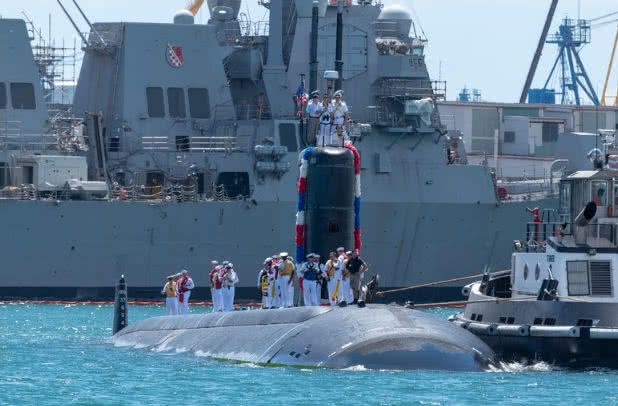
Getting Up to Speed
On his first visit to Santa Fe, when Marquet greeted crew members, they didn’t make eye contact. They seemed defeated, having been told repeatedly that their submarine was the worst.
The equipment around the ship was different from any he’d worked with before. So instead of relying on his technical expertise, as he had in the past, Marquet had to rely on and learn from the crew.
On past assignments, he’d asked questions, to which he knew the answers, in order to test the crew. This time, he was asking out of curiosity and in order to learn. This unusual position also allowed him to focus on the people and interaction rather than the equipment.
In interviews, he asked the officers and chiefs questions such as:
- What should I not change?
- What do you hope I will change?
- What good things should we build on?
- What gets in the way of doing your job?
In reviewing what he’d heard, Marquet realized there were a lot of problems with how Santa Fe operated—for instance, delays; screw-ups; careless handling of evaluations, transfers, and requests for leave; and failure to review reports and records.
A Call to Action
Initially, Marquet spent his time walking around and talking to people. He attended a department heads meeting—everyone was late and the meeting started late because they waited for the CO. Marquet talked afterward to Lieutenant Dave Adams, the weapons officer, who was frustrated because he wanted to improve his department but his ideas were being shot down by superiors. The chiefs working for him weren’t eager to change either.
Adams was running into the problem with the leader-follower model: inertia. However, Marquet was encouraged by the officer’s attitude and desire to improve things.
As another example, Marquet found a junior sailor upset because his request for Christmas leave had received no response, though he submitted it many weeks ago. Procedures called for this kind of request to go through seven people. Marquet tracked it down and took care of it—in this case, the system rather than the people failed.
He also spent time observing the ship’s routines, many of which were pointless or demoralizing.
Despite the many issues, he sensed that the crew still wanted to do well and wanted things to improve. He felt he could tap into the desire for change. For him, the crew’s frustration was a call to action. He decided to go ahead with a leader-leader model.
Questions for Leaders
- Do people in your organization want change or to keep the status quo?
- Are they frustrated by inefficient systems and red tape that makes their jobs harder?
- Are managers complacent?
- Do people focus on covering their butts or on making the organization better?
- Are you maintaining control or giving control?
Chapters 6-7: Just Following Orders
December 1998
On Board the Santa Fe, Pearl Harbor
During Christmas break, Marquet wandered around the ship, where a skeleton watch crew was performing routine duties. He asked the petty officer on watch, “What do you do on the ship?” The answer was a cynical “Whatever they tell me to do.”
The petty officer’s reply revealed he was an unhappy follower who wasn’t taking any responsibility for his unhappiness. It was an insulting comment to a commander (implying that the leadership was incompetent). But it also encapsulated the problem and the attitude pervasive among the crew.
The Wrong Kind of Leadership
The executive officer (XO) on Santa Fe required department heads to check out with him before leaving for the day, so he could go over tasks he had given them to do and ensure they weren’t leaving with something major undone.
But this made the XO, not the department head, responsible for each department head’s work; the XO thus “owned” the task. Marquet believed that the department heads should use check-out to report what they’d accomplished and planned to do, thereby taking ownership.
While it would be risky for the leader to have accountability but give up decision-making authority, this would be better than the passivity of the “whatever they tell me to do” approach, where brains were shut off.
The XO’s check-out procedure was another example of the pervasiveness of the leader-follower mentality. The result was that out of 135 men on board, only a handful were engaged in problem-solving. A whole range of procedures like this reinforced leader-follower. Santa Fe’s problem wasn’t a leadership vacuum, but too much of the wrong kind of leadership. The cost was passivity and paralysis.
Taking Command
As Marquet sat on the stage awaiting his part in the official change-of-command ceremony, he thought of the positives he’d uncovered on his visits to Santa Fe:
- The crew wanted change.
- He had a supportive chain of command.
- His lack of technical knowledge about this submarine meant he had to rely on the crew’s knowledge and ability. This would keep him from succumbing to the leader-follower mentality.
- His task was clear: Radically shift the crew’s focus from doing the minimum and avoiding errors to striving for and achieving excellence.
When the outgoing CO had finished his speech, Marquet stood and with the traditional response, “I relieve you,” he became the commander of Santa Fe.
Focus on Excellence, Not on Avoiding Errors
The Navy’s submarine force was obsessed with reporting, tracking, and analyzing errors, which created a strong incentive to focus exclusively on avoiding them. When Marquet took command of Santa Fe, the crew focused on rotely following myriad procedures intended to minimize errors.
While this might have prevented some problems, it was paralyzing and left no room for achieving excellence, which Marquet defined as “exceptional operational effectiveness.” While understanding and minimizing mistakes is valuable, it should be primarily a side benefit of excellence.
Marquet decided to introduce change in the middle of the operation, with the chiefs (the senior enlisted personnel equivalent to middle managers). They were often motivated by things like following checklists, passing inspections, looking good, and avoiding mistakes. However, Marquet wanted to motivate them by connecting their daily activities to a larger sense of purpose.
Exercise: Are You Focused on Avoiding Errors?
In many organizations, managers and employees are focused on avoiding errors rather than on achieving excellence. This drains energy and initiative and results in mediocre performance.
Are your employees striving for excellence or just trying to avoid mistakes? How can you tell?
How do you as a leader reinforce a focus on error avoidance? For instance, do you spend more time critiquing errors than celebrating successes?
How can you make excellence your focus, while still minimizing errors?
Part 2: Control | Chapter 8: The First Steps
When he assumed command, Marquet’s goal was to create a leader-leader structure by pushing control—the authority to decide what to do and how—downward to the officers and crew.
Over time, Marquet and his officers came up with 20 “mechanisms” (Navy terminology for methods practices) to transform Santa Fe from a leader-follower to a leader-leader organization. The mechanisms focused on three key areas:
- Control: Decentralize decision-making to increase the crew’s initiative and motivation.
- Competence: Increase the crew’s technical competence and knowledge to make good decisions.
- Clarity: Ensure crew members are clear on the organization’s goals so their decisions align with what Santa Fe needed to accomplish.
The initial focus was on decentralizing control.
Mechanisms for Redistributing Control
The typical leader-follower structure is designed to push information up the chain of command to the people who make the decisions. In contrast, Marquet pushed control down to where the information originated.
Besides pushing authority downward to the chiefs, here are the other mechanisms or methods Marquet used to spread control throughout the organization:
- Identify practices and procedures embedded in the organization—the “genetic code”—that dictate control and rewrite them.
- Get people to act differently and they’ll begin thinking differently (starting with the “three-name rule.”).
- Have supervisors do brief check-ins to ensure crew members are on the right track so time isn’t wasted.
- Have everyone start conversations with the phrase “I intend to…” instead of asking for permission to do something.
- As supervisors, resist the impulse to jump in with solutions when problems occur. Instead, let crew members decide what to do.
- Eliminate top-down systems for monitoring work. Instead, let crew members take ownership of the work and report their progress.
- Get people to “think out loud” about what they intend to do to clarify the rationale for decisions.
- Welcome inspectors as experts who can help the organization improve.
January 8, 1999
Submarine Base, Pearl Harbor (172 Days to Deployment)
Although there was an axiom that “the chiefs run the Navy,” they lacked true authority. A top-down leader-follower system was heavily embedded in the Navy and particularly in the submarine force. It started with the Navy’s emphasis on the total accountability of the ship’s commanding officer, which meant that not much happened without getting the CO’s permission.
With followers heavily dependent on the leader, a submarine’s performance hinged on the technical ability and personality of the CO. As a result, performance over time was inconsistent—a ship might do well under one commander, then poorly under the next.
Marquet wanted Santa Fe’s chiefs to go against the grain of the leader-follower tradition and training. Many of them were skeptical, but they agreed that they truly wanted to run the submarine, and they began to talk about what this would mean.
Mechanism: Change the Rules for Control
The chiefs identified an array of problems, including:
- Below-average advancement rates for their teams
- A lengthy qualification program that produced few people qualified to stand watch
- Poor performance evaluations for the ship
- An understaffed watch program which put too much stress on too few people to operate the submarine 24/7
- Lack of authority to control the schedules of their division and men
Instituting a “Chiefs in Charge” program would make the chiefs accountable for the performance of their divisions and crew members. They would need to be involved in their team’s activities and in the operations of the ship. They would spend less time sitting around in the chiefs’ quarters.
For the chiefs to actually run the ship, they needed to be in charge of their own crews, which meant being in charge of crew members’ leave. Instead of the existing 14-step process for approving leave, they decided to make the chief of the boat the final approver for enlisted leave requests. This would eliminate six steps.
A one-word change in the rules put the chiefs in charge of all aspects of managing their crews: watch schedules, qualification schedules, and training school enrollments (because all these things were connected to managing leave). Initially, Marquet worried that the chiefs would automatically approve all requests to curry favor with their crews, but that didn’t happen.
Concerns about decentralizing authority usually fall into two categories: competence and clarity. People worry that those below them won’t make good decisions, either because they lack knowledge or because they don’t understand the organization’s goals. Parts 3 and 4 of this book discuss how to address those concerns.
Changing the rules is a mechanismfor decentralizing control.The first step in delegating decision-making authority is: go a step beyond your comfort zone. On Santa Fe, that step was trusting that the chiefs understood the goals of the operation the way Marquet did, and thus would manage leave requests wisely. Marquet referred to this understanding as having organizational clarity, which is discussed in Part 4. You communicate organizational clarity by talking at every level about what you want to achieve.
Decentralizing decision-making makes an organization stronger in a way that will last beyond any individual’s tenure. In the book Built to Last, Jim Collins and Jerry Porras write that while leaders come and go, built-in policies and systems endure.
Instead of giving speeches and justifications for change, Marquet and his teams identified the organizational practices and procedures that needed to be changed for the leader-leader method to work beyond his tenure as commander.
The “chiefs in charge” initiatives helped Santa Fewin the award for the best chief’s quarters for the seven consecutive years.
Questions for Leaders
- How can you help your middle managers embrace hands-on work, responsibility, and accountability?
- What embedded policy or rule can you change to give middle managers decision-making authority?
- What are your concerns about delegating control?
- What control do you as the leader need to delegate to reinforce your message and set an example?
Chapter 9: The Three-Name Rule
January 11, 1999
Pearl Harbor, Hawaii (169 Days to Deployment)
The chiefs’ new authority generated excitement and strengthened their connection with the sailors responsible for day-to-day maintenance and operation of the submarine. Both chiefs and crew became more engaged in their work and the overall mood was more upbeat.
There was also a lot of work ahead. In the months before deployment, there would be an escalating series of inspections, starting in eight days when Commodore Kenny and squadron staff would ride on the submarine and observe. Marquet needed a success to convince skeptics that his leader-leader model would work.
Mechanism: Change Behavior, Then Thinking
Marquet decided to involve the entire crew by instituting a behavior change that he hoped would lead to changed thinking and morale. His idea emerged from a discussion with his officers about morale. Marquet asked them how they’d know if the crew were proud of Santa Fe. The answers included:
- They’d brag to family and friends, including friends on other submarines.
- They’d look visitors in the eye and greet them.
Marquet essentially decided to institute that behavior in hopes that a different way of acting would lead to a way of thinking. He established a “three-name rule.” This required that when any crew member saw a visitor, he would greet the person using three names: the visitor’s name, his name, and the ship’s name. It would go like this: “Good morning Commodore Kenny, my name is Petty Officer Smith. Welcome aboard Santa Fe.”
From Victims to Actors
The three-name rule helped crew members feel proactive rather than like victims or passive reactors. By taking the initiative to greet visitors, each sailor was taking charge of the moment.
Marquet believed that feeling victimized rather than taking responsibility had contributed to the low morale. For instance—the crew felt deadlines couldn’t be met, parts would always arrive too late, they wouldn’t get jobs they requested, and so on. Practicing the three-name rule helped to break that cycle and introduce new thinking.
Changing behavior is a mechanism for decentralizing control.
Questions for Leaders
- What do you do when your employees don’t want to change the way they’ve always done things?
- What are the costs and benefits of doing things differently in your company and industry?
- Which do you do first: change behavior or change thinking?
Chapter 10: Changing Focus
January 20, 1999
Pearl Harbor, Hawaii (160 Days to Deployment)
Marquet had been in command for 12 days when Santa Fe headed out to sea after repairs and maintenance, to further prepare for the Commodore’s four-day inspection.
They were doing a practice exercise that involved locating an enemy submarine, monitoring it, and sinking it if they were ordered to do so. But the crew was still focusing on complying with procedures and avoiding mistakes rather than on combative effectiveness.
In charting the route out to sea, they focused on the procedures for avoiding buoys, shallows, boats, and other hazards rather than on determining a route that would take them to where the enemy submarine was likely to be. So they charted the wrong course for a successful exercise. No one noticed this because the officers reviewing the proposed route were also focused on ensuring the charts met procedural standards.
Marquet didn’t see the charts until they had moved up the chain of approvals, so he didn't discover the problem until the last minute—and then the charting had to be redone. He decided that in the future, to prevent wasted time, he’d have a quick conversation with the navigator early in the process to ensure planning was focused on the right objective.
Mechanism: Brief, Early Conversations Prevent Wasted Time
To get the officers and crew thinking about operational goals, Marquet started having frequent, brief conversations at all levels. Once they were focused on the right thing, he could back off.
Having brief, early conversations is a mechanism for decentralizing control. The key for Marquet was making them useful without disempowering people. He was careful not to tell people what to do, but to just give feedback on what they were doing. The solution was still up to them. However, Marquet gave them clarity on the overall objective, or what they needed to accomplish. A conversation of a few minutes could save hours.
Questions for Leaders
- What can you do to implement quick checks in your organization?
- How often does your staff waste time and money going in an unproductive direction?
- What inefficiencies or misunderstandings have you uncovered by checking in with staff while they are working on something?
Chapter 11: Use Proactive Language
January 21, 1999
Pearl Harbor, Hawaii (159 Days to Deployment)
During an engineering propulsion drill, Marquet learned how a passive leader-follower mindset on Santa Fe could lead everyone off course. So he instituted a change in the crew’s language to create a proactive mindset.
The engineering drill involved a simulated problem that shut down the submarine’s reactor. The crew had to locate and fix the problem, then restart the reactor. While it was shut down they would use a small electric engine for propulsion at a very slow speed.
Marquet ordered an engine speedup to make the exercise more challenging. However, he didn’t realize that Santa Fe’sbackup engine differed from those of other submarines in his experience and lacked a speed-up function. The officer on deck knew this, but he passively passed Marquet’s order to the crew, who couldn’t implement it and so, just sat there.
To create a more proactive mindset among the officers and crew in the future, Marquet decided to require them to actively state what they were going to do in a given situation, rather than ask for permission or wait for an order. They would announce, “I intend to…” spelling out their intentions and he or their superior would respond, “Very well.” Then they‘d proceed with their plans.
Mechanism: Turn Followers into Actors by Changing the Language
Requiring crew members to announce their proposed actions by stating, “I intend to ... “ pushed decision-making downward. It required officers and crew to take ownership of a situation and decide what to do.
Everyone became actors; they stopped using “follower” phrases such as: “May I have permission to,” “I’d like to,” “Could we,” “What should I do about,” and “Do you think…”
Marquet further extended this concept. He’d found that instead of just saying “very well,” he had a tendency to revert to top-down management by asking a lot of questions. So to counter this, he asked officers and crew to elaborate on their reasoning when stating their intent, so he wouldn’t need to ask questions, just concur.
Requiring a fuller explanation had the added benefit of pushing them to think at a higher level. This was, in effect, a leadership development program. The “I intend to” procedure was a significant factor contributing to an unusually large number of promotions among Santa Fe officers and crew over a decade.
Rather than one person handing down orders to 134 followers, Santa Fe had 135 motivated and engaged crew members thinking about what to do and how to do it. Followers became leaders.
Exercise: Implement “I Intend to…”
To get Santa Feofficers and crew members thinking proactively rather than seeking permission or orders, Marquet required everyone to state their intended actions, beginning with the phrase, “I intend to…”
How proactive are senior managers and employees in your organization? Do they use follower language such as, “May I have permission to,” “I’d like to,” “Could we,” “What should I do about,” “Do you think…”?
How can you encourage everyone to become actors instead of followers by using phrases like: “I intend to,” “I will,” “I plan to,” “We are…”?
What steps would it take to implement an “I intend to…” procedure at your workplace? How do you think your employees would respond?
Chapter 12: Top-Down Habits
January 27, 1999
Pearl Harbor (153 Days to Deployment)
Santa Fe picked up Commodore Kenny and the inspection team and headed out for the inspection exercise. In the process, Marquet learned two more lessons about decentralizing control.
In the first instance, he learned that if you tell people to do something specific, you should also explain why you made your decision. Better yet, let your people decide what to do. In discussing the torpedo exercise, in which Santa Fe needed to intercept and sink an enemy submarine, Marquet pointed to the chart and said, “We need to be at 0600,” based on where he thought the enemy would be.
He went to grab some sleep and when he woke up, he found the ship was several miles off position and headed away from the enemy. The watch team had been derailed by responding to contacts and navigational challenges rather than moving to the best tactical position.
Marquet realized that he shouldn’t have given a specific direction without explaining his reasons and focusing his team on the objective. As control is shared, the team needs to be aligned with the organization’s goal. Although he’d talked about accomplishing the mission, the crew was still focused on procedure (in this case, avoiding contact with other vessels to maintain secrecy).
After several hours, they got back on track, spotted the enemy’s periscope and prepared to attack. That’s when Marquet learned his second lesson about giving orders. Submarines are required to raise a radio antenna at a certain time daily to pick up and download radio messages from the Navy, which could contain important information. Submarines can only be in radio contact at limited times.
Just as the crew spotted the enemy submarine, a crew member requested permission to raise the antenna and download the broadcast, which would have given away their position and delayed firing the torpedo.
Instead of issuing orders this time, Marquet waited for his team to decide what to do. They realized that when they fired the torpedo, they’d have to report it by radio, and they could download the messages at the same time. They fired and the exercise was a success.
Mechanism: Resist the Urge to Provide Solutions
Emergency situations can require instant decisions—however, in the vast majority of situations, there’s time to let the team decide what to do. Resisting the urge to provide solutions is a mechanism for decentralizing control.
Here’s how to get your team members thinking on their own:
- If you have to make an urgent decision, have your managers discuss it after the fact. Or, time permitting, ask for input and then make the decision.
- If you can delay the decision, seek input but don’t push for consensus—this stifles dissent, which you need and should value. You don’t need people who always think like you do.
Chapter 13: Create a Sense of Ownership
January 28, 1999
On Board Santa Fe (152 Days to Deployment)
While observing the torpedo exercise, the inspection team also reviewed Santa Fe’s administrative procedures and found that officers hadn’t responded to several messages and requests from higher authorities.
They had been tracking the messages and filing them in a three-ring binder. The officers reviewed the binder once a week to forward requests and keep track of the work, but sometimes they dropped the ball. Besides being ineffective, the system meant that the officers were taking responsibility for the work of others below them.
Marquet attended the officers’ next meeting, where they discussed how to turn the system around to ensure that department heads were responsible for the work of their departments.
Mechanism: Eliminate Top-Down Monitoring of Work
To replace the old tracking system, they decided to use a model similar to the daily check-out system where department heads reported to the XO for a bottom-up dialogue. They put each department head in charge of keeping track of messages relevant to his department and getting the work done.
Eliminating top-down monitoring is a mechanism for decentralizing control.The system of pushing responsibility down worked, and while they still occasionally missed something they were supposed to report on, the system of pushing responsibility downward created a greater sense of ownership among department heads.
How Organizations Undermine Ownership
In many organizations, supervisors are frustrated that employees don’t take ownership of their work, but company procedures work against ownership. Instead of talking about ownership, it’s important to establish procedures that give people responsibility and ownership.
The first thing to do is eliminate top-down systems for monitoring people’s work. You still need systems that track data and measure what’s important, but you don’t need senior managers determining what middle managers and others should be doing.
When organizations are process-focused, they can get into an unproductive cycle. First, following processes takes precedence over achieving the objective the process is supposed to ensure. Then the goal becomes avoiding process errors. When errors happen, companies add supervisors, whose presence does nothing to achieve the original objective. All they do is point to process errors after the fact.
In the book Out of Crisis, W. Edward Deming presented leadership principles for Total Quality Leadership. He explained there’s a difference between improving and monitoring: improving processes makes an organization more efficient, while monitoring processes makes it less efficient. Having leaders constantly checking up on people undermines their responsibility and initiative.
Exercise: Increase Ownership
While many leaders claim they want managers and employees to take ownership of their work, the company’s top-down systems of controlling and monitoring work prevent this.
Would you say that your managers and employees have a sense of ownership for their work? Why or why not?
What top-down monitoring systems does your company use?
How can you reduce or eliminate these systems—for instance, by letting department heads determine what their employees should be going.
Chapter 14: ‘Think Out Loud’
January 29, 1999
En Route to Pearl Harbor (151 Days to Deployment)
Marquet thought the inspection had gone well, but he was still concerned about how involved he had to be in suggesting solutions to problems. While waiting for the final inspection report, he discussed his concerns with department heads.
They identified several possible reasons for the insufficient initiative. The primary one was a lack of informal verbal communication—for instance, no one gave a heads up that the time to download the radio broadcast was approaching.
The department heads decided to actively encourage greater communication and call it “thinking out loud.” When the captain made a decision, he’d go through his thought processes and reasons out loud. Officers would think out loud about concerns. While this might seem like indecisiveness, it would create a more resilient (less error-prone) system. The practice enhanced teamwork and smooth operations.
Above-Average Results
Commodore Kenny returned to the submarine and reported that the crew had earned an above-average rating. Further, he pronounced Santa Fe “a new ship,” thanks to the leader-leader model of decentralizing control.
Santa Fe’s above-average rating exceeded the mathematical average for the fleet. Marquet broadcast the news to the crew and could hear cheering in response. He cited specific examples of crew initiative and competence, and cited officers for their initiative as well.
While everyone wasn’t on board with the leader-leader model yet, enough people were using the three-name rule and “I intend to” statements to create a new impression of Santa Fe.
The success lent credibility to the leader-leader model and laid a foundation they could build on.
Mechanism: Think Out Loud
Thinking out loud is a mechanism for decentralizing controlbecause when Marquet knew what his officers were thinking, it was easier for him to keep quiet and let them do their jobs.
Thinking out loud goes against Navy training and culture, which says that when reporting something up the chain of command, you should say as little as possible. But thinking out loud is critical to making the leader-leader model work.
Thinking out loud also is a mechanism for creating organizational clarity. If leaders just issue orders, people don’t need to understand your objectives. But in complicated environments like those in which submarines operate, it’s critical for leaders to share their experience and background information.
Chapter 15: Welcome Outside Oversight
January 29, 1999
In Port, Pearl Harbor (151 Days to Deployment)
When Santa Fe arrived in port, the crew needed to hook up four shore power cables so it could shut down its reactor. During this process, a petty officer violated a critical rule. He activated breakers on the pier when he knew it was safe to do so, but without getting clearance to do it. No harm was done but he'd violated a “red tag.” Red tags are attached to critical controls on a submarine so that they can’t be removed to activate the controls without going through clearance procedures.
Marquet was tempted to handle the violation in house because reporting it up the chain of command would result in additional monitoring and scrutiny. However, he decided to treat it as a learning opportunity and reported it to Squadron Seven as well as the Naval Reactors unit, which ensured the nuclear reactors were operated safely.
Marquet scheduled a critique of the incident for the next day and invited both oversight groups to attend. He referred to this approach as “embracing the inspectors.”
Mechanism: ‘Embrace the Inspectors’
Rather than fearing inspectors, Marquet and his staff viewed them as a resource. The inspectors could spread news of Santa Fe’s successes throughout the squadron, share the good ideas of other crews, and identify ways to improve the ship.
Welcoming inspectors sent a message that Santa Fe was responsible and in control of its destiny. In this sense, embracing inspectors is a mechanism for organizational control.
In contrast, most organizations aim to reveal as little as possible to outsiders or auditors, especially when there are problems.
Santa Fe’s crew members approached inspections with questions and curiosity. They acknowledged problems and asked for help solving them, an attitude that inspectors found surprising. As a result, Santa Fe typically got high grades and crew members became exceptionally skilled at their jobs.
Questions for Leaders
- How do you use outsiders—for instance, social media commenters and auditors—to improve your organization?
- How do the costs of being transparent compare to the benefits?
- How can you encourage your team to view inspectors as resources?
Exercise: Embracing the Inspectors
Many organizations get defensive about audits and inspections, and during them, they say as little as possible. In contrast, Santa Fewelcomed inspectors as experts who could help the crew improve.
Who are your company’s inspectors and how do you and your organization typically respond to them? What is your goal?
How did your last inspection go? What did you learn from the results?
How could you have gotten more benefit out of the inspection?
Part 3: Competence | Chapter 16: ‘Mistakes Happen’
Decentralizing control under a leader-leader system only works when the people receiving increased control have the technical competence or knowledge to make decisions. Marquet and his officers used the following mechanisms to strengthen the crew’s technical competence:
- Take “deliberate action”: Officers and crew pause before acting and state their intentions to prevent acting without thinking.
- Learn constantly: Officers and crew approached every activity as a chance to learn and improve.
- Demonstrate readiness: Instead of listening to a briefing or review of instructions, crew members demonstrate they’re prepared to proceed.
- Repeat the message of change until it fully sinks in. Old habits die hard.
- Specify goals, but let crew members decide the best methods for reaching them.
January 30, 1999
In Port, Pearl Harbor (150 Days to Deployment)
On Saturday morning, Santa Fe officers and observers from Squadron Seven and Naval Reactors gathered to critique the petty officer’s “red tag” mistake.
The incident underscored to Marquet that it wasn’t enough for people to be empowered—they also needed to be competent to perform better. To improve competence, he needed to understand what had happened.
Others, however, were focused on accountability. The typical response to a “red tag” violation was a procedure known as a “captain’s mast.” Instead of a trial by court-martial, the captain could impose a nonjudicial administrative punishment, such as forfeiture of pay. While it was important to hold people accountable, Marquet viewed the incident as a symptom of a larger problem.
When he opened the meeting, the first to speak was the petty officer. He said he knew conditions for shutting the breaker had been met, and he moved the red tag aside to do it. He was contrite and candid, admitting to an unexplainable mental lapse when he moved the tag without proper clearance.
Maquet thanked him for his candor and sent him away without a reprimand. He felt the petty officer’s honesty, despite expecting punishment, should earn a reprieve. The bigger issue was how to prevent it from happening again.
Mechanism: Take ‘Deliberate Action’
They discussed refresher training, but they decided it wouldn’t help since there hadn’t been a lack of knowledge about what to do. They considered adding a layer of supervision, but there was substantial supervision already and it hadn’t stopped the error.
Someone argued that sometimes mistakes just happened. Others said the problem was a lack of attention to detail—but telling people to pay closer attention doesn’t work. The key to coming up with a solution was realizing that the petty officer had been operating on autopilot without engaging his brain.
They came up with a mechanism aimed at getting people to act thoughtfully and deliberately—they called it “take deliberate action.” The way it would work was:
Before taking any operational action, a crew member would pause, verbally state what he intended to do, and gesture toward the controls. The purpose was to engage the operator’s mind and eliminate acting automatically.
Taking deliberate action is a mechanism for competence.It was the most powerful step the officers and crew implemented for reducing mistakes and improving operational excellence.
Deliberate action had other benefits in addition to reducing errors. In team activities, the pause and verbal statement allowed others to step in when they saw a problem and prevent it. Similarly, it gave monitors, who were assigned during drills to watch procedures to prevent mistakes, more time to intervene.
Exercise: Instituting ‘Deliberate Action’
To reduce errors made by people acting on autopilot, Santa Fe used a procedure called taking “deliberate action.” Before acting, a crew member would pause and verbally state what he intended to do.
What kinds of mistakes have your employees made by acting on autopilot? How have you responded?
How have you and your company learned from mistakes?
How could you institute a “deliberate action” procedure to reduce errors in your company?
Chapter 17: A Learning Culture
February 13, 1999
Makalapa Housing Area, Pearl Harbor (136 Days to Deployment)
While deliberate action reduces errors, it's not enough, by itself, to build competence. For instance, a sailor made a mistake in the torpedo room that deliberate action didn’t prevent—the problem occurred because he didn’t understand the effects of what he was doing and how certain systems worked together.
If crews only have to do what they’re told, they don’t need a deep understanding of how things work—they just follow procedures. But as their ability to make decisions increases, they need greater knowledge on which to base those decisions.
To create an atmosphere that encouraged learning, officers and chiefs came up with a program they called “we learn,” which established learning as a unifying theme for everything crew members did. No matter what they were doing, they should strive to learn as much as possible from it. While life on a submarine didn’t allow time for lectures, it offered numerous learning opportunities, which seemed to pop up everywhere when the officers and crew started looking for them.
Mechanism: Learn Constantly
Santa Fe’s learning mentality was critical to implementing leader-leader by passing decision-making authority to lower levels. It created a chain of positive effects:
- Learning and training increased competence.
- Greater competence allowed officers to delegate more decision-making.
- Increased decision-making led to greater employee engagement and initiative.
- Productivity, morale, and effectiveness grew.
Learning constantly is a mechanism for creating competence. Inspection teams often commented on the Santa Fe crew’s eagerness to learn.
Questions for Leaders
- What areas of your business are prone to mistakes because employees don’t have the competence to make good decisions?
- How would you create a learning mentality among your staff?
Chapter 18: Ready or Not?
February 22, 1999
Pearl Harbor (127 Days to Deployment)
As Santa Fe left the harbor and headed for San Diego for a series of exercises with the USS Constellation Battle Group, Marquet discovered another weakness they could turn into a mechanism for improving competence.
As the crew got ready to submerge the ship, it seemed to be taking a long time—they were out of practice on submerging rapidly, which was a key combat skill. The diving officer of the watch conducted a briefing (read the procedures out loud), but no one paid attention to this formality. Marquet ran some unexpected drills simulating malfunctioning gauges, which didn’t go well.
When they discussed how things went, one sailor remarked that no one listened to briefings because they felt they already knew the steps to take.
Mechanism: Certify or Demonstrate Readiness
Briefings, or reading procedures out loud before an activity, were a common feature in the Navy. However, they were passive—everyone listened; they had no responsibility to prepare in advance, and it was easy to assent without engaging mentally.
Marquet decided to replace briefings with certifications, in which participants demonstrate readiness and are “certified” to proceed with the task. During certification, a team leader asked the members questions, then decided whether the team was ready to perform the task. It was postponed if the team hadn’t demonstrated the required knowledge.
Everyone was an active participant. The certification process required people to actively review or prepare for their duties. It also placed more responsibility on team leaders, who had to identify the steps needed for the operation and the role of each team member, and determine the level of competency.
The shift from passive briefings to active certifications changed the crew’s behavior. Knowing they’d get questions, crew members prepared ahead of time; the process increased everyone’s intellectual involvement in operations.
Certifying, or demonstrating readiness, is a mechanism for achieving competence. It’s also a checkpoint—the task will either proceed if people are ready, or it won’t if they reveal they aren’t ready because of something they don’t know. Anything less is just a briefing.
Questions for Leaders
- How can you make team members responsible for knowing their job?
- How much do your employees prepare before an event or task?
- Describe your last briefing on a project—how did listeners react?
- How could you certify that your project teams know their responsibilities and the goals of an operation?
- How can you take more responsibility as a leader to ensure teams are ready?
Chapter 19: Don’t Assume They Got the Message
March 5, 1999
San Diego, California (116 Days to Deployment)
On the way to San Diego, Marquet learned that when you give middle managers control over their teams, you can’t assume they’ll act in the team’s interest. This nearly cost Santa Fe a key crew member.
When they reached the port, a junior quartermaster, nicknamed “Sled Dog” for his work ethic, went AWOL (left the boat without permission), after saying he couldn’t take things anymore. A quartermaster is a naval petty officer with responsibility for steering the submarine and charting its course.
Marquet discovered that the underlying problem was that Sled Dog and the other quartermasters were being overworked. Instead of helping to fill in on watch shifts, the chiefs were choosing the shortest shifts for themselves or not filling in at all.
Marquet was sympathetic to the crew and granted Sled Dog amnesty. Meanwhile, he told the chiefs he was upset that some had used their increased authority to make things easier for themselves instead of looking out for their men. They weren’t “walking the walk” and had demoralized the crew. He imposed an equitable scheduling rule to ensure that supervisors shared in rotations rather than taking better shifts than their crews.
Mechanism: Repeat the Message
The chiefs’ behavior bothered Marquet—after two months, he thought they were on board with leader-leader, but they’d fallen into old thinking. He decided they needed continuous repetition of the message.
When you launch a new initiative, some people will “get it” immediately; others will be skeptical or need more time to absorb it. The key to breaking through is repeating the message day after day. Repeating the message is a mechanism for building competence.Even people who are on board emotionally with a change can fall into old habits.
Questions for Leaders
- What messages do you need to keep repeating to make sure your managers take care of their teams?
- Have you ever thought that people understood what you were talking about only to find out later that they didn’t get it?
Chapter 20: Achieve Results
May 1999
Under Way from Pearl Harbor to San Diego (28 Days to Deployment)
At sea again, Santa Fe was heading back to San Diego. On the way, they would be practicing drills and operational skills. Final certification for deployment would happen when they reached San Diego. Things were going well, but a fire drill revealed yet another area where following procedure still took precedence over achieving results.
Fire is potentially catastrophic on a submarine. To prevent disaster, crews needed to have hoses on a fire within two minutes. Marquet called a surprise drill and it went poorly. The crew focused on following procedure (in this case, performing assigned duties) rather than putting the fire out. Some ran past a fire hose instead of grabbing it because others were assigned to handle hoses.
Further, typical fire drills were aimed at practicing techniques, which made crews focus on process. They had no incentive to put the simulated fire out as quickly as possible. Marquet decided they needed to refocus fire drills on one objective: getting the fire out the fastest way possible. The results, not the method or process, would be what counted—just as they would in a real-life situation.
Mechanism: Specify Goals, Not Methods for Reaching Them
To motivate the crew to attack the fire, they adapted drills to the crew’s response. If crews moved quickly to douse the fire in 45 seconds, the drill was over. If they got a hose on the fire in two minutes, the drill ended.
Marquet explained to the crew that the objective was to put the fire out, regardless of who had been assigned to handle the hose. Thereafter, when a fire alarm sounded, the men closest to the simulated fire organized themselves and put it out. The new approach reduced the response time significantly. Santa Fe’s crew became so proficient that they later received awards for their damage control response capability.
Specifying goals, not methods, is a mechanism for creating competence. The crew was given a clear goal—put the fire out as quickly as possible. During a drill or crisis, it was up to the crew members to devise the most effective method.
Ready for Deployment
When Sania Fe picked up the inspectors at San Diego, Marquet felt confident the crew was ready—and he was right. Their performance was outstanding, and Commodore Kenny certified the ship as ready for deployment.
They needed only to return to Pearl Harbor for final preparations and be underway for deployment on June 18—two weeks early.
Questions for Leaders
- Are your people focused on process rather than results?
- When you set goals for your organization, do you also specify the methods for achieving them, or do you leave the methods up to staff?
- How can you refocus your staff on results?
Part 4: Clarity | Chapter 21: Support Your Team
Along with competence, a leader-leader model that decentralizes control also requires clarity. Everyone needs to understand the organization’s goals so that the decisions they make align with what the organization is trying to accomplish. If the purpose isn’t clear, the criteria on which decisions are made may be off base, leading to bad decisions.
Here are the mechanisms Santa Fe adopted to ensure clarity:
- Focus on achieving excellent results, not on rotely following procedures in order to avoid errors.
- Take care of your team. Supervisors should build trust and motivation by putting the team’s interests first.
- Be inspired by your organization’s legacy. Create a sense of mission by connecting present efforts with the past accomplishments.
- Create guiding principles to aid decision-making.
- Immediately recognize excellent performance.
- Begin with the end in mind: Set long-term goals.
- Encourage questions, not blind obedience.
June 18, 1999
Pearl Harbor, Hawaii (Deployed)
Santa Fe was ready to deploy, two weeks early. They would head west and make a stop in Japan, then operate in the western Pacific, Indian Ocean, and Arabian Sea before returning to Pearl Harbor six months later. Besides delivering an outstanding performance, Marquet wanted to focus during the deployment on addressing some needs of the crew.
The officers and chiefs decided to encourage each crew member to set personal development goals during the deployment, such as studying or exercising. In addition, the senior staff set ship-wide goals.
For continuous improvement during the deployment, they set goals for the ship in three areas: empowerment, efficiency, and tactical excellence:
- Empowerment: Senior staff planned to empower crew members to achieve their personal and professional goals through education initiatives, such as helping them to improve their advancement exam scores or take college courses.
- Efficiency: While the crew gained more control, they would strive for greater efficiency in everything they did, ranging from more effective drills to better meal service.
- Tactical excellence: Santa Fewould pursue tactical excellence, including battle group support, effective missile strikes, and special operations.
Mechanism: Take Care of Your Team
In the most recent round of advancement exams, Santa Fe crew members hadn’t done well. While Marquet and the officers focused on preparing the submarine for deployment, they hadn’t helped the crew prepare for the exams—exam scores were a major factor in promotions. Marquet felt they’d let the crew down.
Besides increasing training in areas of the test where the crew had done poorly, they decided to create a practice exam for petty officers. They asked petty officers to write multiple choice questions as they studied to encourage active learning. Senior staff incorporated the questions into the practice exam as well as into ongoing training.
The efforts to improve exam performance paid off months later. One of the petty officers advanced, as did 40 percent of the enlisted crew (48 men). Results were even better in the next two years. By giving the crew members tools to improve on the exams, senior staff empowered them to achieve their goals.
Taking care of your people is a mechanism for clarity.Marquet found that when officers and chiefs supported their teams, they developed trust. When crew members believed officers had their best interests at heart, they took critical feedback better and improved, which advanced the ship’s goals.
Chapters 22: Build on Your Past
July 2, 1999
Western Pacific Ocean (in Command)
As Santa Fe headed through the China Sea toward the Strait of Malacca and the Arabian Sea, the officer of the deck announced on the mic that they were passing the location where the USS Grayling was sunk in September 1943.
The announcement was a reminder to Marquet that the U.S. Navy submarine force had a great legacy of service to the country. However, there wasn’t any formal program for sharing it to inspire and motivate those currently serving.
Mechanism: Be Inspired by Your Legacy
In addition to calling attention to the sites of sunken submarines, Santa Fe staff found several ways to connect the present with the past—for example, they incorporated historical notes in the Plan of the Day. While at Pearl Harbor, officers visited the USS Bowfin submarine museum as “training.”
Highlighting their legacy created organizational clarity by reminding sailors of Santa Fe’s larger purpose. Being inspired by your legacy is a mechanism for clarity.
Chapter 23: Create Leaders
July 1999
Western Pacific Ocean (in Command)
Being on deployment gave Santa Fe’s officers the opportunity to finalize a set of guiding principles. They wanted the principles to help crew members use the right criteria when making decisions. The theme they came up with was “Leadership at every level” and the principles included:
- Initiative: Take action without direction from above to increase your knowledge, improve submarine operations, and solve problems.
- Innovation: Look for new ways to do things. Have the courage to change and to fail.
- Technical knowledge: Take responsibility for learning your job. Know the details of your watch stations and how systems work.
- Courage: Choose to do the right thing, even if it’s uncomfortable. Admit mistakes.
- Commitment: Be mentally engaged when you’re working, and give it your best.
- Empowerment: Encourage those below you to make decisions and support them if they make mistakes. Specify goals but not methods.
- Openness: Speak your mind with others and also be open to new thinking.
Mechanism: Create Guiding Principles
To reinforce the principles, officers used the language of the principles in award citations and evaluations.
Guiding principles are a mechanism for clarity. It’s important that your guiding principles represent the real, not idealized principles of the organization. Since the principles are to be used for decision-making, they need to be aligned with the organization’s real goals.
Questions for Leaders
- What are your organization's guiding principles?
- How do you communicate them? Are they cited in evaluations and awards?
- Are they useful to employees as decision-making criteria? Are they used as such?
Chapter 24: Recognize Achievement
July 10, 1999: The Strait of Malacca
Santa Fe moved on the surface through the crowded Strait of Malacca, between Singapore and Indonesia, because it was shallow. Numerous large vessels, as well as ferries and fishing boats, used it daily, which made the three-day passage tricky.
The submarine’s crew decided it would be safest to follow closely behind an empty tanker, which other vessels would avoid. Marquet was driving the submarine from the bridge at night, when he suddenly saw a dimly lit tugboat that was pulling a barge cross in front of them. Santa Fe had to reverse its engines and managed to stop just before hitting the tow line.
Marquet immediately went below and commended the engineering team for avoiding an accident. The man who saved the ship was the petty officer who had previously violated a red tag. Later, at the crew’s mess, Marquet praised the petty officer for his professionalism and pinned a Navy achievement medal on him. He would later file a report, but used immediate recognition to reward and reinforce outstanding performance.
Mechanism: Immediately Recognize Top Performance
Typically, the Navy is slow to provide recognition and awards, letting administrative processes get in the way. Yet immediate recognition is a powerful motivator and reinforcer of desired behaviors. Immediately recognizing top performance is a mechanism for clarity.
Chapter 25: Long-Term Thinking
July 15, 1999: Indian Ocean
Marquet decided to have a one-hour mentoring session with a key supervisor each day focused on long-term issues and goals. He asked supervisors to identify the end-of-tour awards they were striving for, or write their own personnel evaluation for the next year, indicating what they would accomplish.
To keep the mentoring from falling into a leader-follower format, Marquet developed it as a mentor-mentor program, where both he and the officer shared ideas on what Santa Fe needed to accomplish and what the officer could do for himself and to support the ship.
Together, they wrote specific, measurable goals for each supervisor and a plan to accomplish them, and determined how to measure achievement. In one case, the officer's end-of-tour citation two years later sounded exactly like what they’d written. By beginning with the end in mind, they achieved the desired results.
Mechanism: Begin with the End in Mind
Beginning with the end in mind is a mechanism for organizational clarity.
Beginning with the end in mind—envisioning the results you want and developing a plan for achieving them—is important for every organization. Plans should have specific, measurable goals.
Here are some ways you can apply this concept in your organization:
- With your senior leadership, read and discuss chapter 2 of Stephen Covey’s The 7 Habits of Highly Effective People. (Shortform note: Read our summary of The 7 Habits of Highly Effective People.)
- Develop three- to five-year goals for your organization.
- In evaluations, use statements that quantify achievements, using measurements previously agreed on.
- Have employees write their own evaluations for several years out—their goals should align with organizational goals and be quantifiable.
Chapter 26: Build Resilience
September-December 1999: In the Arabian Gulf, then the Pacific
In the Arabian Gulf exercise, Santa Fe was assigned to attack another sub, the USS Olympia, which was playing the role of an enemy diesel boat. They were halfway through the deployment, and were preparing to fire the first submarine-launched torpedo in the Arabian Gulf.
A rear admiral was on board observing the exercise, which would demonstrate not only Santa Fe’s abilities, but also the ability of a U.S. submarine to attack and sink a submarine in shallow water. The exercise was designed to send a message of deterrence to potential U.S. adversaries. It also was a test of the leader-leader model.
Santa Fe’s crew performed flawlessly without Marquet’s involvement. The exercise torpedo scored a hit, which Marquet announced to the cheers of the crew.
Two months later, Santa Fe had returned from deployment and was conducting an exercise with the Navy SEALs. The submarine was to pick up a SEAL team dropped by a helicopter, secretly drop the team near shore, then recover them after their mission. The team left the submarine and would return to it in inflatable rafts.
While maneuvering to pick up the team, Santa Fe got into water that was too shallow. Further, Marquet looked at the controls and thought the ship was going the wrong direction to reach deeper water. He ordered the quartermaster, Sled Dog, to back up and was stunned when Sled Dog responded, “No, you’re wrong.”
Then Marquet remembered that the plan was for the submarine to be turned so it faced away from the shore while awaiting the Seal team, in order to make a quick getaway. Santa Fe moved forward 100 yards into deeper water, and moments later, they spotted the Seals on their rafts. Had the crew followed Marquet’s order, they could have missed the pickup.
Mechanism: Encourage Questions, Not Blind Obedience
Encouraging questions, not unthinking obedience is a mechanism for clarity. A culture that encourages questioning builds organizational resilience, or ability to resist errors. The crew had clarity on the mission and therefore the confidence to question the commander—and a mistake was averted.
Questions for Leaders
- Does your organization have a culture that encourages questioning over blind obedience?
- How can you create a resilient organization where errors are stopped?
- Would your managers or employees unquestioningly follow a wrong order?
Chapter 27: Assessing the Leader-Leader Model
January 2000
At Anchor off Lahaina, Maui
Marquet and his officers had read and discussed Stephen Covey’s book, The 7 Habits of Highly Effective People, so he was pleased when Covey, who had sought Navy permission to ride a submarine, was assigned to Santa Fe.
Covey’s visit, during a short proficiency training run in the Hawaiian Islands, offered Marquet an opportunity to reflect on what his team had accomplished under the leader-leader empowerment model.
This list included:
- Traveling 40,000 miles safely
- Making port calls in six countries without any behavior problems
- Maintaining the sub at total operational readiness, unhindered by any repair, maintenance, or personnel issue
- Reenlisting 19 crew members while on deployment, setting the bonus award record
- Awarding 22 submarine qualifications and qualifying 290 individual watch stations
- Demonstrating key capabilities in the torpedo exercise, transiting straits safely multiple times, and picking up the SEALS.
- Most importantly, increasing retention from three reenlistments in 1998 to 36 in 1999; officer retention went from 0 to 100%
Santa Fe’s retention numbers increased primarily because of the “Chiefs in Charge” program—junior enlisted men aspired to become chiefs, because those jobs were now central to the submarine’s operation. Prior to leader-leader, the chiefs enjoyed certain privileges but weren’t seen as particularly relevant.
In addition:
- Santa Fe was awarded the Arleigh Burke Fleet Trophy for the submarine, ship or aircraft squadron that improved in battle efficiency the most in a year.
- In 2001, Santa Fe received a record-high grade on its reactor operations exam.
A Different Kind of Leadership
Marquet deviated from the traditional leadership model by:
- Reviewing people rather than reviewing the work.
- Requiring fewer reports and checkpoints.
- Giving fewer orders and making fewer decisions than a traditional leader would, thus developing leadership at all levels.
Chapter 28: Nurture Innovation
Summer 2001: Strait of Hormuz
Eighteen months after Covey’s visit, Santa Fe was on deployment again, operating in the Strait of Hormuz at periscope depth, when the submarine developed a problem. There was an oil leak the crew couldn’t fix at sea and the submarine was running out of oil. However, Santa Fe’s empowerment culture saved the day.
They spotted a navy resupply (combat support) ship, USS Rainier , several miles away and decided to ask for oil. Protocol required making a supply request 36 hours in advance. However, the crew ignored the bureaucratic process, which was unheard of, and simply contacted the ship and asked for oil.
Rainier’s captain agreed to provide oil and also to assist in several other ways as well. He invited Santa Fe to send over its outgoing mail plus any crew members needing dental checkups. When the crew members returned from their checkups, they brought fresh fruits and vegetables and newspapers. Because the crew came up with an innovative resupply solution and capably pulled it off, Santa Fe was able to continue its defense mission rather than diverting to port for an oil fill-up.
The crew was not only empowered to make decisions, but it was also emancipated to make unconventional ones.
Mechanism: Don’t Just Empower, Emancipate
It’s necessary to empower people under the leader-leader model because people have been disempowered in the past. But empowerment alone isn’t enough to change the way things work because it’s a variant of the top-down approach (someone does the empowering).
Along with empowering employees, leaders need to release or free them to apply their talents, energy, and creativity, by getting out of the way. Teams are emancipated when they have decision-making authority supported by competence and clarity. You no longer need to empower them, nor can you, because their sense of power comes from within.
Chapter 29: Lasting Effects
January 15, 2011: Submarine Base, Pearl Harbor
Santa Fe’s achievements and innovations under Marquet’s leadership lasted long after his departure and spread throughout the submarine force.
Twelve years after Marquet took command of Santa Fe, Commander Dave Adams, former weapons officers under Marquet, took charge. Also, three officers from Santa Fe were chosen from hundreds of candidates by the chief of naval operations for special assignments in Afghanistan.
Santa Fe produced additional leaders in disproportionate numbers compared to other submarines. Both of its executive officers were selected to command submarines, and they were later selected for major command positions. Three department heads were promoted to executive officer and then to commanders of their own submarines. Many enlisted men were promoted as well.
In terms of operational performance, Santa Fe won the award for best chiefs’ quarters for seven years in a row and the Battle “E” award for most combat-effective submarine three times in 10 years. Deliberate action was adopted across the submarine force. Two other Santa Fe mechanisms—the “I intend to ..” procedure and certification—were picked up by others.
The leader-leader model is the only one that can produce top performance and long-term excellence. If the model can turn the Navy’s worst-performing submarine into its best, it can work in any organization.